The Riviera ouest already has a headline act in Cannes, so Antibes and Juan-les-Pins tend to get compressed into a half-day add-on. That undersells them. Antibes is a working port town with ramparts, a genuine market and a museum built around the months Picasso spent in the Château Grimaldi overlooking the sea. Juan-les-Pins, a short walk south, is where the sand actually is. Together they make a fuller day than most itineraries allow.
Antibes old town: ramparts, market, Picasso
The old town sits inside 16th-century ramparts on a small headland, with narrow streets that stay shaded even at midday. The Cours Masséna market runs mornings (closed Mondays outside summer), selling Provençal produce, olives, soap and flowers; arrive before 11 a.m. for it at its liveliest. From there it is a five-minute walk to the musée Picasso, housed in the Château Grimaldi, a former bishop’s residence and Grimaldi family seat where Picasso worked through the autumn of 1946. The collection is compact rather than exhaustive, and the terrace view over the sea and the old ramparts is worth the entry on its own.
Below the museum, the ramparts walk along the water gives a good sense of Antibes as a fortified port rather than a resort. The town’s defences were later reinforced by Vauban, whose name also attaches to the harbour.
Fort Carré and Port Vauban
Fort Carré stands on a promontory just north of the old town, a star-shaped 16th-century fortress that guarded the approach to Antibes. It is open for guided visits most of the year (check the schedule, as hours shrink outside summer), and the climb up gives a wide view back over the town and the anchorage.
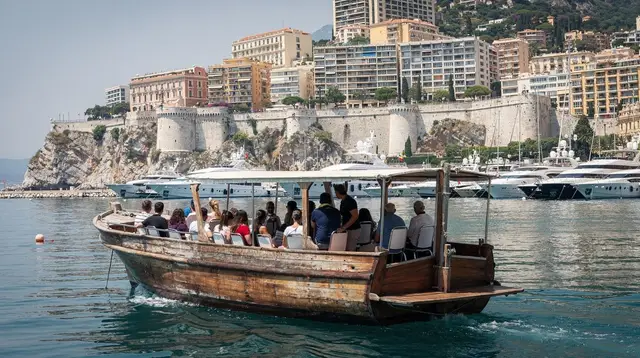
Below it stretches Port Vauban, one of the largest marinas in Europe and the place where the Riviera’s yacht culture is most visibly on display: rows of sailing boats give way to a stretch known locally for the size of the motor yachts moored there. Walking the quay is free and takes 20-30 minutes end to end. If you want to be on the water rather than just looking at it, a short sailing trip out of the port is a straightforward way to see the coastline from the sea, and a private skippered yacht out of Antibes is one option for a small group without needing sailing experience of your own.
Juan-les-Pins: sand, and a different pace
Juan-les-Pins is technically part of Antibes but feels like a separate town, reached by a 15-20 minute walk or a short bus ride from the old town. This is where the beaches turn to sand, which sets it apart from the pebble coast in Nice — worth knowing if a proper beach afternoon matters to your trip. The bay is more sheltered than the open coast further east, which keeps the water calmer for swimming through the summer.
Juan-les-Pins built its reputation in the 1920s and 30s as a fashionable resort, and it still leans that way in July and August, with beach clubs, restaurants and late terraces along the seafront. It is also the home of Jazz à Juan, a long-running open-air jazz festival held each July in the pinède by the sea; if you are visiting then, expect fuller hotels and higher prices across both towns.
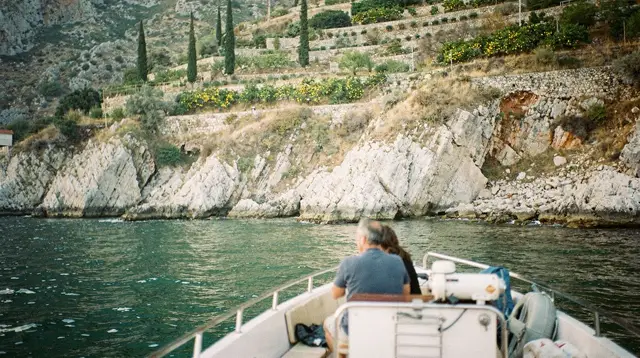
A boat trip along this stretch of coast, watching for dolphins or taking in the calanques toward the cape, is one of the more relaxed ways to spend a few hours here; a snorkeling and wildlife-watching boat excursion off Cap d’Antibes combines the swim stop with the coastal views without needing your own transport.
Cap d’Antibes: the coastal path
Between Antibes and Juan-les-Pins, the Cap d’Antibes peninsula is largely residential — villas, private gardens, and some of the more discreet real estate on the coast — but its edge is public. The sentier du littoral (coastal path) traces the shoreline around the cape, alternating between rocky headlands, small coves and pine woods, with the sea close enough to swim from several points along the way.
Walking the full loop takes 3-4 hours at an easy pace, longer with swim stops, and there is little shade for long stretches, so this is a morning walk in summer, not an afternoon one. Shorter sections are accessible from either the Antibes or Juan-les-Pins side if you want a taste of it without committing to the whole circuit. Good shoes matter: parts of the path are uneven rock rather than a groomed trail.
What Antibes is not
It is worth being clear about what is nearby but not here. The Iles de Lérins — Sainte-Marguerite and Saint-Honorat — sit off the coast of Cannes, not Antibes; boats leave from the Cannes port, roughly 20-30 minutes away by train or road, so treat that as a separate trip rather than something you can fold into an Antibes afternoon. Biot, the hilltop village known for its glassworks, is a short drive inland from Antibes and worth a mention for anyone extending the day, but it has its own character and is better treated as its own stop than squeezed into an Antibes itinerary.
Getting there and getting around
The TER coastal train connects Nice-Ville to Antibes in about 25-30 minutes and continues on to Cannes in another 15 minutes, making Antibes an easy stop on a longer coastal day. By car, allow 30-40 minutes from Nice outside peak traffic, more in July and August when the coast road slows. Within Antibes and Juan-les-Pins, the old town and the port are walkable, and a short local bus links the old town to the Juan-les-Pins beachfront if you’d rather not walk both ways in the heat.
Antibes has its own train station, separate from the one at Juan-les-Pins one stop further down the line, so check which platform suits your plan for the day.
| Route | Mode | Time | Approx. cost |
|---|---|---|---|
| Nice to Antibes | TER train | 25-30 min | €5-7 |
| Nice to Antibes | Car | 30-40 min | Fuel + parking |
| Antibes old town to Juan-les-Pins | Walk | 15-20 min | Free |
| Antibes old town to Juan-les-Pins | Local bus | 10 min | €1.50-2 |
| Antibes to Cannes | TER train | 15 min | €3-4 |
Where the day tends to go wrong
Antibes rewards a plan, and a few things trip up visitors who wing it. The Picasso museum closes on Mondays (and sometimes for changeover between exhibitions), so it is worth checking before you build a day around it. Parking in the old town is limited and expensive in summer; the train removes that problem entirely. And because Antibes sits between two bigger names, some tours reduce it to a 45-minute photo stop on a Cannes-focused itinerary — fine if that is all the time you have, but a poor substitute for actually walking the ramparts or sitting on the sand in Juan-les-Pins.
For a broader look at how Antibes fits against its neighbours, see Antibes versus Cannes as a base and the wider day trips from Nice hub. A half-day tour combining Antibes and Cannes is one way to see both without doubling back, and a private Antibes half-day tour from Nice works if you’d rather have transport arranged.
Eating and buying in Antibes
The Cours Masséna market is the obvious first stop for produce, cheese, olives and flowers, and several of the stalls sell food ready to eat on the spot. Restaurants cluster around the old town’s narrow streets and along the port, with prices climbing near the harbour view tables. A guided walk that folds in tastings is a good way to get past the tourist-facing terraces near the ramparts; an Antibes Provençal tasting tour through the old town covers several stops with a local guide, and a market and old-town tasting walk that also takes in the Picasso museum grounds pairs food with the town’s main sight in one outing.
For context on regional food more broadly, see the Nice food guide and the Provence and Bellet wine guide.
Antibes with limited time or a car
If you are short on time and touring by car along the coast, Antibes pairs naturally with a wider western Riviera loop; a Nice, Cannes and Antibes day trip or a self-guided run using the driving and parking in Nice notes as a starting point both work. Travellers relying on trains and buses should read getting around the French Riviera before planning a multi-stop day, since connections are frequent but not instant.
For a broader sense of where Antibes sits among the coast’s beaches, best beaches in Nice and the Riviera covers the sand-versus-pebble question in more detail than fits here. And if the ramparts and Fort Carré leave you wanting more fortified towns, the best viewpoints on the French Riviera guide has other options nearby.
Best time to visit Antibes
The Riviera’s usual pattern holds here. June to September is warm and reliably dry, and by August the sea off Juan-les-Pins and the Cap d’Antibes coves sits around 24-26°C, which is when swimming is easiest but also when the old town, the port and both beaches are at their most crowded and priciest. Late spring (May-June) and September give most of that warmth with noticeably thinner crowds, and they are the window the quick facts above point to for a first visit.
Winters are mild on this stretch of coast, often 12-15°C on a sunny afternoon, but the sea is too cool for casual swimming and some seasonal beach clubs close, so a winter visit suits the museum, the ramparts walk and the market more than the beach side of the day. Whatever the season, avoid building a tight schedule around October-November: this part of the coast can get sudden, heavy Mediterranean rain events, and an outdoor day in Antibes and Juan-les-Pins is easily washed out with little warning.
Antibes as part of a longer Riviera trip
Antibes works well as a single stop, but it also slots naturally into a longer plan. Travellers building a western Riviera loop often pair it with Cannes and a crossing to the islands; the two-day Cannes, Antibes and Lérins Islands itinerary lays out one way to sequence that without doubling back on the train line. Families spreading a trip over several days can see where Antibes fits alongside Nice and the coast in the four-day itinerary for Nice with kids, since the sand at Juan-les-Pins and the flat old-town streets suit children better than some of the steeper perched villages inland. For anyone planning to skip car rental altogether, the French Riviera without a car itinerary covers how Antibes fits into a train-based route, which lines up with the TER timings already given above.
Where to base yourself around Antibes
Staying in Antibes itself means walking distance to the ramparts, the market and the Picasso museum, with the option to reach the sand at Juan-les-Pins on foot in under twenty minutes. It is a quieter base than Cannes, with fewer restaurants and a smaller hotel scene, but a shorter walk to a swimmable beach than most of central Nice offers. Travellers weighing the choice directly can read the fuller comparison in Nice versus Antibes as a base, already linked above, or look further along the coast with Nice versus Cannes as a base if Cannes’ larger hotel and nightlife scene is also on the table. For a guided introduction to the old town’s layout before deciding where to stay, an Antibes old town walking tour is a low-commitment way to get oriented on a first visit.
Antibes and Juan-les-Pins: practical questions
How do I get from Nice to Antibes?
The TER coastal train runs from Nice-Ville to Antibes in about 25-30 minutes, several times an hour. Driving takes 30-40 minutes depending on traffic, longer in July and August. There is no need for a car if you are staying on the coast.
Are Antibes and Juan-les-Pins the same place?
They are the same commune but two distinct areas. Antibes is the walled old town with the harbour and the Picasso museum. Juan-les-Pins, a short walk away, is the beach and nightlife side, known for its sandy shoreline and the Jazz à Juan festival.
Does Antibes have sandy beaches like Cannes?
Juan-les-Pins has genuine sand, and it is the main reason people come here to swim rather than in Nice, where the coast is pebbles. Antibes itself has a mix of small sandy coves and rockier stretches, so it is not one continuous sandy beach the way Cannes or Juan-les-Pins can feel.
Is the Picasso museum in Antibes worth the visit?
It is one of the more rewarding smaller museums on the coast. It occupies the Château Grimaldi, where Picasso worked for a few months in 1946, and the setting overlooking the sea is part of the appeal. Expect to spend 45-90 minutes inside; check opening days before you go, since it closes on Mondays.
Can I walk from Antibes old town to the Cap d’Antibes?
Yes, on foot along the coastal path, though it takes planning. The Cap d’Antibes shoreline path is a proper walk of several hours in full, with rocky sections and limited shade, so bring water and good shoes rather than treating it as a stroll from the old town.
How far are the Iles de Lérins from Antibes?
The Lérins Islands are not reached from Antibes. Boats to Sainte-Marguerite and Saint-Honorat leave from Cannes, about 20-30 minutes away by road or train, so plan that as a separate outing rather than a same-day add-on from Antibes port.
Is Antibes a good base instead of staying in Cannes or Nice?
It works well if you want something quieter than Cannes and closer to a real beach than Nice, with a walkable old town and its own train station on the coastal line. It has fewer big hotels and a shorter list of restaurants than either neighbour, which suits a slower few days more than a first, do-everything visit.