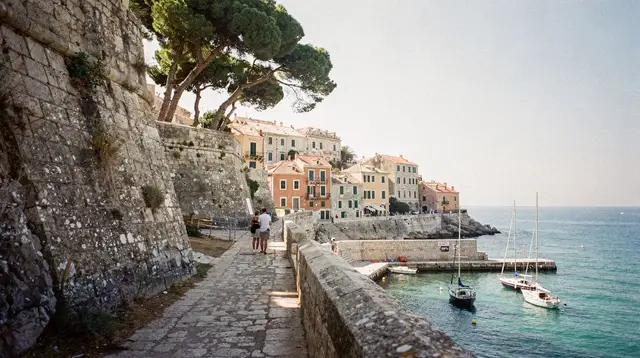
The best photo spots in Cannes
Where are the best places to take photos in Cannes?
The three reliable spots are La Croisette for the palm-lined waterfront and the Palais des Festivals steps, and Le Suquet's hilltop streets for a wide view over the old port and the bay. Early morning gives the emptiest frames; May is the busiest and most disrupted month because of the Cannes Film Festival.
Three spots, one hillside, and a festival that changes everything
Cannes is compact enough to photograph properly in a morning: the waterfront, one landmark building, and one hill. The story here is the light, the crowd, and the angle — not the history of each building, which Walking Cannes: La Croisette, the Palais and Le Suquet already covers. If you’re weighing Cannes against a full sightseeing day, see Cannes day trip from Nice first; this page assumes you’re here mainly for the camera.
The three places that consistently produce good frames are La Croisette, the Palais des Festivals, and Le Suquet. Each one rewards a different time of day, and each one gets difficult to shoot cleanly once the pavements fill up. Cannes does not have a hidden angle nobody else has found — the good spots are well known — so the real skill here is timing, not discovery.
La Croisette: the waterfront shot
La Croisette is the curved boulevard that runs along Cannes’ main beach, lined with palm trees, grand hotels and, in season, private beach clubs with rows of blue and white umbrellas. Photographically it works two ways: shot along its length, using the curve of the palms and the hotel facades as leading lines toward the Palais des Festivals; or shot from the beach side, with the sea in the foreground and the hotel row behind.
The palm trees and cast-iron lamp posts are what make the frame recognisably Cannes rather than any generic Mediterranean seafront — keep them in shot rather than cropping tight on a single building. The pavement is wide, which helps: even when it’s busy you can usually find an angle that isolates a few metres of railing and sea without a crowd behind it, something that’s much harder on Le Suquet’s narrow lanes.
Before around 9am, La Croisette is close to empty: a handful of joggers, delivery vehicles, and staff opening the beach clubs. By mid-morning it fills with walkers, and parked cars and beach-club signage start crowding the pavement edges out of frame. Late afternoon and the hour before sunset bring the light back down low and warm, but by then the promenade is at its busiest, so expect people in most wide shots unless you frame tightly on the architecture.
A walking tour along this stretch, paired with the old port, covers the ground efficiently if you’d rather not plan the route yourself — a guided walk through Cannes’ seafront and old town hits La Croisette, the Palais des Festivals and Le Suquet in one outing, with a guide who knows where the light and the gaps in the crowd line up.
The Palais des Festivals: the building, not the event
The Palais des Festivals et des Congrès — the building that hosts the Cannes Film Festival every May — sits at the western end of La Croisette, next to the old port. On an ordinary day, there is no red carpet, no barriers, and no crowd: it’s a large, plain conference building with a broad flight of steps out front, photographable like any public plaza. The steps themselves, empty, are a common and slightly ironic shot precisely because everyone associates them with the festival crowd that isn’t there.
The building photographs best straight-on from the plaza, or from an angle that includes the marina and the moored boats to one side — it ties the Palais visually to the port rather than isolating it as a slab of concrete. It is not an especially beautiful building on its own merits; the photograph works because of what it represents, not its architecture, so don’t expect a striking frame without the context of the port or the crowd (or lack of one).
If you’re here specifically because of the festival’s reputation, read The Cannes Film Festival: a visitor’s guide before you plan a trip around it — the practical picture in May is very different from an ordinary day, covered below.
Le Suquet: the view that ties it together
Le Suquet is Cannes’ old town, a small hill of narrow streets rising just behind the port. It’s the one spot in Cannes with genuine elevation, and it’s where the wide shots come from: climb toward the old church at the top and you get the old port, the rows of yachts, the Palais des Festivals, and the curve of La Croisette in a single frame, with the hills behind Cannes as a backdrop.
The streets themselves are narrow and stepped, lined with old shutters and small restaurants, and they photograph well in the soft light of early morning or the hour before sunset, when the stone holds a warm colour and the streets aren’t yet full of people heading to dinner. Late morning through the afternoon is when tour groups and lunch crowds move through, and the narrowest lanes get genuinely difficult to shoot without people in frame.
The main viewpoint near the top faces roughly south-southwest, so late-afternoon and sunset light comes in from the front-right, lighting the port and the boats well; sunrise light is softer but flatter from that angle. Either way, Le Suquet is the spot to save for last if you’re combining it with La Croisette and the Palais in one outing — the elevation makes it the natural place to end the walk and look back at everything else you shot.
For a boat-level counterpart to Le Suquet’s aerial view — the same port and marina, but from the water — see the boat trip options below, or a private tour of the port itself: a private tour of Cannes’ old port and marina gets close to the yachts and the waterfront from an angle Le Suquet can’t offer.
Timing and light, spot by spot
| Spot | Best light | Quietest time | Busiest time |
|---|---|---|---|
| La Croisette | Early morning or golden hour | Before 9am | Midday to sunset, all season |
| Palais des Festivals | Midday to late afternoon (open plaza) | Early morning | Festival dates in May |
| Le Suquet | Early morning or sunset | Before 9am, or after 8pm in summer | Late morning to early evening |
None of these times are absolute — Cannes’ crowd levels shift with the season and with whatever event is on. Outside July, August and the festival in May, all three spots are workable at almost any hour without much planning. In peak summer, treat the quiet windows above as close to mandatory if you want frames without dozens of people in them.
May and the Cannes Film Festival: plan around it, not through it
The Cannes Film Festival runs in May, and it changes the city more than any other event on the Riviera. Sections of La Croisette are closed to the public near the Palais, security barriers and bag checks slow movement around the festival zone, hotel and restaurant prices rise sharply, and the red carpet and photocall areas are restricted to accredited press and guests — not something a visitor can walk up to and photograph.
If your goal is clean photographs of Cannes rather than festival atmosphere, avoid the festival dates entirely; the city is far easier to shoot in April, June, or September, when the same landmarks are open and unobstructed. If you specifically want festival energy — crowds, premieres, the buzz around the Palais — treat it as a different kind of trip, and expect to shoot from further back, in bigger crowds, at higher prices. Either way, check the exact festival dates before booking, since they shift by a week or two each year.
Getting a wider angle: boat, bike and air
A few options move the photography off the pavement entirely. From the water, Cannes’ waterfront and Le Suquet’s hill look different again — lower angle, full width of the bay in frame. a private boat tour along the Cannes coastline gives that view without needing to plan around foot traffic on La Croisette at all, and it works at most times of day since the crowd problem on land doesn’t apply on the water.
From above, a scenic flight covers La Croisette’s full curve, the Palais, Le Suquet and the bay in a way no ground-level spot can match — a private helicopter flight over Cannes and the coastline is the option for that, best booked for clear weather and, again, outside festival dates when airspace and ground logistics near the Palais get more complicated.
An e-bike along the coast toward the Corniche d’Or, or a sidecar ride tracing the same route, covers ground fast between spots if you’re combining Cannes with the red rock coastline further east — useful if a single morning needs to stretch across more than the three core spots described here.
What doesn’t need shooting
A few things get skipped on purpose here. The full history of the Palais, the festival’s red carpet ritual, and a walking narrative of Le Suquet’s streets are covered properly in Walking Cannes: La Croisette, the Palais and Le Suquet — this page stays on framing, light and crowd levels rather than retelling that story. The Îles de Lérins and Antibes are close to Cannes but belong to their own pages: see Best viewpoints on the French Riviera for a Riviera-wide view rather than a Cannes-only one, and Cannes boat tours and the crossing to the Lérins Islands if the islands are part of your plan.
Cannes’ beaches themselves — mostly sand, unlike Nice’s pebbles — aren’t the focus here either; they photograph well but in a fairly ordinary beach-scene way that doesn’t need much technique beyond avoiding the private beach-club umbrellas cluttering the frame.
Practical notes
Cannes is easiest to shoot as a half-day: La Croisette and the Palais early, Le Suquet toward the end of the morning or saved for sunset. Combining it with a same-day trip from Nice is realistic — see Cannes day trip from Nice for the transport side of that. If Cannes is one stop on a longer loop that also takes in Antibes and the islands, Cannes, Antibes and the Lérins Islands in two days lays out a realistic two-day version.
A few general travel mistakes apply here as much as anywhere on the coast — overpacking a single day, underestimating how long the walk up to Le Suquet takes in summer heat, or assuming any spot stays quiet all day. French Riviera travel mistakes to avoid covers the broader list. And if Cannes is part of a wider photography trip along the coast, Photo shoots in Nice: the best spots and how to book one and Best sunset spots in Nice cover the equivalent spots in Nice for comparison.
For activity listings around Cannes beyond photography, Things to do in Cannes and the Photo shoots category both link into bookable tours across the category.
Frequently asked questions about photographing Cannes
What is the single best photo spot in Cannes?
Le Suquet, the hilltop old town, gives the widest view: the old port, the Palais des Festivals and the curve of La Croisette in one frame. It also works well at sunset, when the light comes in low over the bay.
What time of day is best for photographing La Croisette?
Before 9am. The promenade fills with walkers, joggers and parked cars by mid-morning, and the light is flatter by midday. Late afternoon into golden hour works too, but the pavement is busier than at dawn.
Can you photograph the red carpet steps at the Palais des Festivals?
Yes, the steps and the building’s front are public and photographable outside of festival dates and private events. There is no red carpet laid out on an ordinary day — it appears only during the Cannes Film Festival in May, and access is restricted then.
Is Cannes a good place for photos during the Cannes Film Festival?
Not for casual photography. In May, La Croisette is partly closed to the public, barriers and security checks slow movement near the Palais, and hotel and restaurant prices rise sharply. Visit before or after the festival for open access.
Where can you photograph the old port in Cannes?
From the quay itself for boat-level shots, or from Le Suquet above for a wide view that includes the yachts, the Palais des Festivals and the hills behind Cannes.
Do you need a permit to take photos in Cannes for personal use?
No, casual photography with a phone or camera on public streets and the waterfront needs no permit. Tripods and tour groups on some narrow Suquet streets should stay considerate of residents, and commercial shoots involving crews or props may need local authorisation.
Is Cannes crowded for photos outside of May?
Much less. Outside the festival and the peak of summer, La Croisette and Le Suquet are walkable and photographable without waiting for gaps in the crowd, especially early or late in the day.
Private photo shoots in Vieux-Nice and the Riviera
Verified deep-linked GetYourGuide tours. Book through these links and we earn a small commission at no cost to you.
GetYourGuide does not provide a product photo for this activity — the image shows the meeting point, photographed by us.