Nice for visitors with limited mobility: what actually works
Is Nice easy to get around if you have limited mobility?
Nice is one of the more manageable Riviera towns for limited mobility: the Promenade des Anglais is flat for roughly 7 km and the tram (lines 2 and 3) covers most of the city step-free. Vieux-Nice has cobbles and narrow pavements, the beaches are pebble rather than sand, and Colline du Château has a lift as well as a steep path.
What’s actually easy to reach in Nice
Most Riviera guides sort Nice by neighbourhood or by budget. This one sorts it by effort: what you can cover on foot or by tram without steps, steep slopes or rough ground, and what needs planning around if stairs, distance or uneven surfaces are a problem. None of this is a claim about specific ramps, adapted toilets or certified equipment — those details vary by venue and change, so check directly with a site or operator before you rely on them. What follows is what the streets, the transport and the terrain are actually like, based on walking them.
The short version: Nice is one of the more workable Riviera towns for limited mobility, mostly thanks to two things — a long, flat seafront promenade and a modern tram network. The old town and the beaches are the two places where the city gets harder, and it’s worth knowing that before you build a day around them. For general orientation to the city first, see the Nice destination guide and Nice for first-time visitors.
The Promenade des Anglais: the easiest 7 km on the Riviera
The Promenade des Anglais runs level along the Baie des Anges for roughly 7 km, from the airport in the west to the Quai des États-Unis near Vieux-Nice in the east. It’s paved, flat, wide, and has a separated cycle path running alongside the pedestrian side, so wheels — pushchairs, wheelchairs, rollators — move easily without dodging cyclists. There are no steps along its length, and benches appear at regular intervals if you need to stop and rest. It’s the single best stretch of accessible walking on the Riviera, full stop.
You don’t need to cover all 7 km. A shorter, flat out-and-back from the Quai des États-Unis toward the Hotel Negresco and back is under 2 km round trip and takes in the best of the views over the bay, with cafés and public benches along the way. For a fuller read on the route’s history and landmarks, see Promenade des Anglais history and walk.
One honest caveat: the promenade runs above the beach, and the beach itself is a separate, harder surface (more on that below). The promenade is the flat option; stepping down onto the pebbles is a different proposition entirely.
Getting around without a car: the tram
The tramway, lines 2 and 3, is the easiest way to cross Nice without driving. Cars are low-floor with level boarding at most stops, so there’s no step up from the platform, and stops are generally reached by ramp or gentle slope rather than stairs. Line 2 runs from Aéroport Nice Côte d’Azur (NCE) through the city centre and on to the port; line 3 links further stops across town. Ticket machines are at platform level, and trams run frequently enough that you’re rarely waiting long.
This matters most on arrival: taking the tram from the airport avoids negotiating luggage on airport buses or navigating for a taxi rank in high season. For the full route and connections, see the Nice tram guide and Nice airport to city centre. If you’d rather not manage public transport transfers at all, a private transfer removes that variable — see Nice airport transfers.
Buses (Lignes d’Azur) fill in where the tram doesn’t reach, but coverage and step access vary by route and stop, so the tram is the more predictable choice when step-free travel matters. Driving yourself is generally more hassle than help inside Nice: parking is scarce and traffic dense in the centre. If you do want a car for excursions further out, see driving and parking in Nice and consider that a car makes more sense for day trips than for getting around the city itself.
Colline du Château: lift or climb, know before you go
The Colline du Château is worth flagging on its own, because it’s easy to misjudge. There is no château at the top — it was demolished centuries ago — what’s there now is a park, ruins, an artificial waterfall, and one of the best viewpoints over the Baie des Anges and the port. The catch is the hill itself: reaching the top on foot means a genuinely steep climb, either up stone steps or a winding path.
The good news is that a public lift runs up to the park level, which sidesteps the climb entirely. It’s the difference between this being an easy stop and a hard one. If you’re planning around limited mobility, treat the lift as the default option rather than the paths, and don’t assume the climb is a quick five minutes — it isn’t. Once at the top, the paths around the park itself are mostly level, so the views and the waterfall are reachable without further climbing. More detail on the site and the walk up: Castle Hill: Nice viewpoint and waterfall.
Vieux-Nice: charming, but uneven
The old town — Vieux-Nice — is the most atmospheric part of the city: narrow lanes, ochre façades, baroque churches, the morning market on the Cours Saleya. It’s also the part of central Nice with the least even ground. Streets are cobbled or paved in old stone, some are quite narrow, pavements come and go, and there are short slopes in places, particularly toward the base of Colline du Château. None of this is on the scale of a hill village like Èze or Saint-Paul-de-Vence — Vieux-Nice is largely flat in its overall layout — but it’s slower and bumpier going than the Promenade or the modern grid of streets around Place Masséna.
If cobbles and uneven surfaces are a real obstacle, the practical approach is to pick a few streets rather than trying to cover the whole old town, and to time it outside the midday crush, when narrow lanes fill with foot traffic. A guided option can also help here, since a local guide already knows which routes avoid the worst of the unevenness:
a guided walk through Vieux-Nice built around easier, more manageable routes, which takes the guesswork out of which lanes to avoid.
For general orientation to the old town’s layout, see Nice old town: Vieux-Nice walk and Nice old town walking tours.
The beach reality: pebbles, not sand
This has to be said plainly, because it’s easy to picture Riviera beaches as soft sand: the beaches in Nice are pebble, all along the Promenade des Anglais, not sand. That’s true of the public beaches and most of the private ones in the city itself. Pebbles are hard going for wheels and uneven, shifting footing for anyone with balance or mobility difficulties — walking down onto a pebble beach is a genuinely different proposition from walking the promenade above it.
Some private beach clubs put down mats or boardwalks toward the waterline in the summer season, which can help, but this isn’t universal and isn’t guaranteed from one summer to the next — check directly with a specific beach before counting on it. If a beach day matters to you, sand does exist further along the coast, at Juan-les-Pins and parts of Cannes and Antibes, though that means factoring in travel time rather than staying in Nice itself. For a fuller rundown of what to expect from the coastline, see pebble beaches in Nice: what to expect and best beaches in Nice and the Riviera.
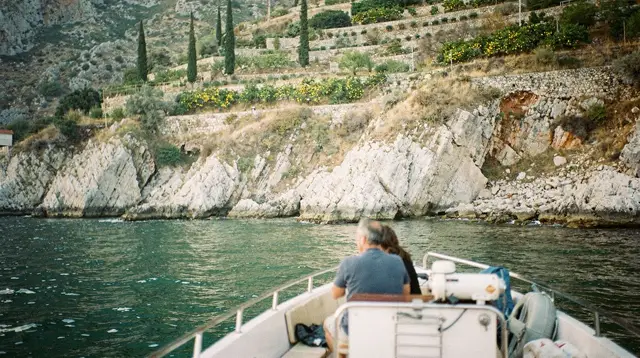
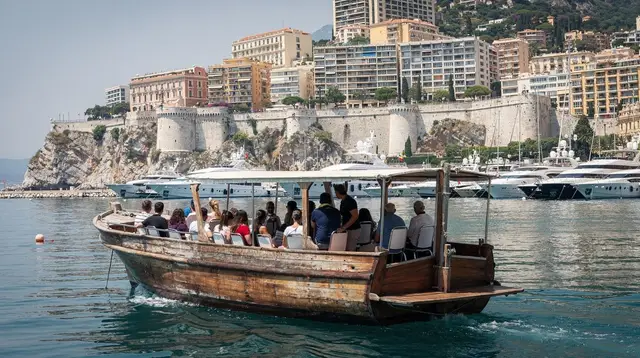
If you’d rather experience the water without stepping onto pebbles at all, a boat trip is a reasonable substitute for a beach afternoon:
a private boat trip along the coast, with food on board instead of a stretch of shingle.
Museums and indoor sights with easier access
Nice’s larger museums are generally the easiest indoor stops. The Musée national Marc Chagall and the Musée Matisse in Cimiez both have level entry and lift access to their main galleries, and neither requires much walking between rooms. Smaller sites in older buildings, particularly in Vieux-Nice, are less consistent — some have a step or two at the entrance, and lift access inside older buildings isn’t guaranteed. It’s worth checking a museum’s own accessibility page before a visit if a step at the door would be a problem, rather than assuming.
For a rundown of what’s worth seeing and how the sites compare, see Nice museums and attractions tickets, best museums in Nice and the Nice city pass and museum pass guide, which can also save time standing in ticket queues.
Where to stay for the flattest walk
Where you base yourself changes how much uneven ground you deal with day to day. Staying somewhere along or close to the Promenade des Anglais, or around the flat streets near Place Masséna, keeps you on the easiest terrain and close to a tram stop. Staying up in Cimiez or tucked into the upper lanes of Vieux-Nice means more slopes and steps built into an ordinary day, whatever the sights themselves are like. For a neighbourhood-by-neighbourhood breakdown, see where to stay in Nice by neighbourhood.
Effort level, at a glance
| Sight or area | Terrain | Effort | Notes |
|---|---|---|---|
| Promenade des Anglais | Flat, paved, ~7 km | Low | Best accessible stretch on the Riviera |
| Tram (lines 2 and 3) | Level boarding | Low | Airport to centre and beyond |
| Place Masséna and modern centre | Flat, paved | Low | Wide pavements, few obstacles |
| Colline du Château (via lift) | Flat once up top | Low–moderate | Skip the steps, take the lift |
| Colline du Château (on foot) | Steep steps or path | High | Not a quick climb |
| Vieux-Nice | Cobbled, uneven, narrow | Moderate | Slower going, a few short slopes |
| Nice beaches | Pebble | High | Hard for wheels and unsteady footing |
| Musée Matisse / Musée Chagall | Level, lift access | Low | Among the easiest indoor sights |
Beyond the flat routes
Not every part of a Riviera trip has to stay on the ground. If steps and slopes are the limiting factor, a scenic flight or a slower-paced ride removes the terrain question altogether:
a shared helicopter flight over the bay and the coastline, which covers views that would otherwise mean climbing to a lookout point, and a guided Segway tour along the flatter parts of the city as a lower-effort way to cover more ground than walking allows.
For trip planning beyond Nice itself, most hill villages and coastal towns further along the Riviera involve more steps and slopes than the city centre does — see best perched villages of the French Riviera for what to expect if a day trip is on the itinerary, and French Riviera travel mistakes to avoid for the wider list of things that catch visitors out. If you’re weighing how many days to spend in the city itself before venturing further, how many days in Nice and one day in Nice lay out realistic pacing.
Nice accessibility: frequently asked questions
The questions below cover the practical points that come up most often when planning around limited mobility in Nice — the promenade, the tram, the hill, the beaches and the old town.
Is the Promenade des Anglais flat and easy to walk?
Yes. It runs level along the Baie des Anges for about 7 km, with a paved pedestrian side and a separate cycle path, and no steps along its length.
Can you reach the top of Colline du Château without climbing?
Yes, there is a public lift up to the park, as an alternative to the steep paths and steps. Note there is no château to see at the top today, only ruins, gardens and viewpoints.
Are the beaches in Nice accessible?
Nice’s beaches are pebble, not sand, which is hard going for wheels and unsteady footing for anyone with limited mobility. Some private beach clubs offer mats or boardwalks toward the water in summer; check with the individual beach before relying on this.
Is the tram in Nice step-free?
Yes, trams 2 and 3 run level-boarding with low-floor cars, and most stops have ramps or gentle slopes rather than stairs, making the tram the easiest way to cross the city without a car.
Is Vieux-Nice manageable with a wheelchair or walking difficulties?
It is workable but not effortless: the old town has cobbled or uneven stone streets, some narrow pavements, and a few short slopes. It’s flatter than most hill villages on the Riviera, but slower going than the Promenade or the modern city centre.
Does Nice airport connect easily to the city for someone with reduced mobility?
Yes. The tram (line 2) runs from the airport terminals into the city centre with low-floor cars and step-free stops, which is generally easier than negotiating luggage and stairs on a bus.
Are the main museums in Nice step-free?
Most of the larger museums, including the Musée Matisse and the Musée national Marc Chagall, have lift access and level entry, though some older buildings in Vieux-Nice have a step or two at the door. Checking each museum’s own access page before visiting is worth the two minutes.
Accessible outings in Nice and on the Riviera
Verified deep-linked GetYourGuide tours. Book through these links and we earn a small commission at no cost to you.
GetYourGuide does not provide a product photo for this activity — the image shows the meeting point, photographed by us.