Cannes food tours: Forville market, the Croisette and Le Suquet
What is the best food tour to do in Cannes?
Most visitors do best with a small-group walking tour that starts at Forville market and moves into Le Suquet, tasting local produce, cheese and wine along the way. Half-day tours run roughly 3 to 4 hours and cost €70 to €130 per person; book a morning slot, since Forville closes early afternoon and stalls thin out well before then.
Where Cannes actually eats: Forville, the Croisette and Le Suquet
Cannes is known worldwide for the Palais des Festivals and red-carpet photos on La Croisette, but the city that residents actually eat in sits a few streets back from the seafront. The centre of that world is Forville market, a covered produce hall a short walk inland from Le Suquet, the old hilltop quarter above the port. This guide stays on that ground: the market, the old town, and the food and wine that come out of Cannes itself, rather than the beach clubs on the Croisette or the perfume houses of Grasse, which get their own separate treatment in this guide site.
Forville is not a tourist stage. It is where Cannes chefs, hotel buyers and residents shop every morning: crates of Provençal tomatoes, stalls of goat cheese from the Alpes-Maritimes hills, fishmongers with the morning catch, olive oil producers, and bakers selling fougasse and socca-style chickpea snacks. A guided tasting tour through the market, followed by a walk up into Le Suquet, is the most honest way to understand what Cannes cooking actually is, away from the Michelin-starred hotel restaurants that dominate the Croisette’s reputation.
Forville market: what to expect
Forville market occupies a purpose-built covered hall a few minutes’ walk from the old port and the base of Le Suquet. It runs most mornings except Monday, when the market hall switches over to a flea market (brocante) instead of food stalls. The best window to visit is before midday: stalls sell through their best produce steadily from opening, and by early afternoon many vendors are already packing up.
Expect stalls selling:
- Provençal vegetables and herbs, seasonal and often local (tomatoes, courgette flowers, aubergines, thyme, basil)
- Cheese, including goat cheeses from farms in the Alpes-Maritimes hinterland
- Charcuterie and prepared foods: tapenade, pistou, stuffed vegetables (petits farcis)
- Fresh fish and seafood from the morning’s catch
- Bread, fougasse and local pastries
- Olive oil, honey and small-producer jars and bottles
None of this requires a guide to see, and browsing Forville on your own costs nothing beyond what you buy. Where a guided tour earns its price is in the tastings arranged with specific stallholders, the context on what is actually seasonal versus imported, and a walk that continues logically into Le Suquet rather than stopping at the market door.
a small-group walking tour that moves from Forville market into the old town with tastings along the way is the most straightforward way to do this in one outing, typically 3 to 4 hours, without having to plan the route or the stops yourself.
Le Suquet: the old town above the port
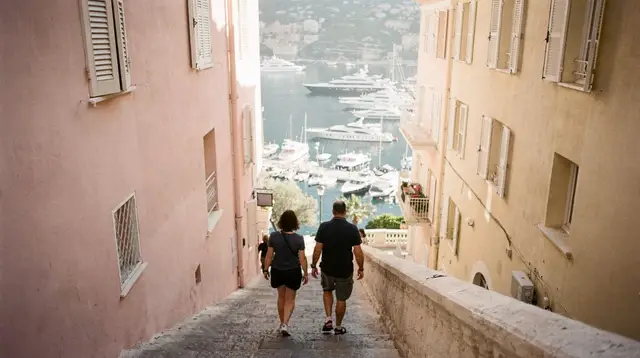
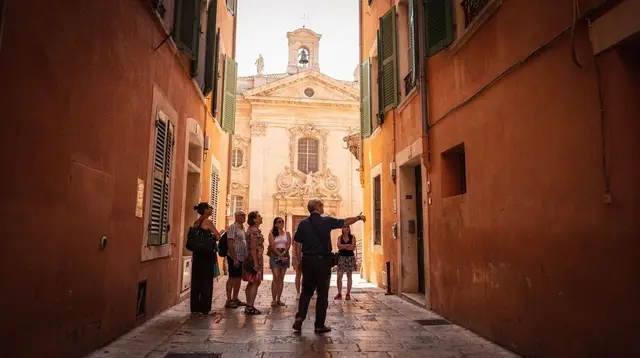
Le Suquet is Cannes before the film festival existed: narrow lanes climbing the hill above the old port, with a watchtower and the Notre-Dame d’Espérance church at the top, and views back down over the port and the bay toward the Îles de Lérins. It is also where the more genuinely local restaurants sit, tucked into side streets rather than facing the Croisette. Prices here run noticeably lower than on the seafront, for food that is often better.
A tasting walk through Le Suquet typically covers small bistros doing socca, tapenade on toast, stuffed vegetables and simple Provençal plates, plus a look at the old fishing port itself, still used by small boats alongside the yachts moored further along the marina. The climb is gentle but real: expect uneven cobbled streets and some stairs, which is worth knowing if mobility is a concern.
For a guide who frames the old town differently, weaving in film festival history and Croisette landmarks alongside the food stops, a walking tour that pairs Cannes’ cinema history with local food and wine stops covers both threads in one outing.
The Croisette: glamour, and where the food really is
La Croisette is Cannes’ seafront promenade, lined with grand hotels, the Palais des Festivals and high-end boutiques, and it is genuinely worth walking for the views back toward Le Suquet and out to the Îles de Lérins. It is not, however, where most of the city’s better food is. Restaurants directly on the Croisette carry a location premium comparable to seafront dining anywhere on the Riviera; the same quality, and often better, is available a few streets back or up in Le Suquet.
That said, the Croisette has its own food identity worth a stop: the grand hotel patisseries and a handful of well-regarded bakeries in the surrounding streets. A lighter, more playful way into this side of Cannes is a croissant and pastry tasting tour through Cannes’ bakeries, which works well as a morning outing before Forville gets busy, or as a shorter alternative for visitors with limited time.
Provençal cooking and wine, without inventing what isn’t there
Cannes sits inside the same culinary world as the rest of the Alpes-Maritimes: Provençal in its base ingredients — olive oil, tomatoes, herbs, garlic — with a coastal layer of fish and seafood. Dishes worth knowing before a market visit or a restaurant meal:
| Dish or product | What it is |
|---|---|
| Socca | Thin chickpea-flour pancake, cooked hot and eaten by hand, a Nice speciality also found in Cannes |
| Pistou | Provençal basil, garlic and olive oil paste, close cousin to pesto but without pine nuts |
| Tapenade | Olive paste, usually black olives, capers and anchovy |
| Petits farcis | Small stuffed vegetables (tomato, courgette, pepper), a home-cooking staple |
| Fougasse | Flat, slashed bread, sometimes studded with olives or herbs |
On wine, the region’s own appellation is Bellet, a small AOC around Nice, alongside the wider range of Provence rosés and reds produced across the department. A food tour that includes wine will typically pour from these regional categories; treat any specific named estate or vineyard as something to confirm with the operator directly rather than assumed, since small-producer lists change from season to season. For a broader look at what the region produces beyond Cannes itself, see the Provence and Bellet wine guide.
Planning a food-focused day in Cannes
A realistic half-day plan: start at Forville market when it opens, before the best produce sells through, then walk up into Le Suquet for a slower lunch stop and the viewpoint at the top. If time and appetite allow, add a Croisette pastry stop either before the market or as an afternoon coffee break. This sequence avoids the market’s dead hours in the afternoon and the worst of the midday Croisette crowds in summer.
Realistic timing and cost:
| Element | Typical time | Typical cost |
|---|---|---|
| Forville market visit (self-guided) | 45–60 minutes | Free to browse; €5–€15 per item bought |
| Small-group market and old town tasting tour | 3–4 hours | €70–€130 per person |
| Le Suquet walk and viewpoint | 30–45 minutes | Free |
| Croissant or pastry tasting tour | 1.5–2 hours | €35–€60 per person |
| Lunch in Le Suquet (bistro, away from the Croisette) | 1–1.5 hours | €18–€35 per person |
Prices vary with season and operator; treat these as planning ranges, not quotes. July and August push both prices and crowds higher across Cannes, and the film festival in May does the same for a narrower window around the Palais des Festivals and the Croisette specifically — Forville market itself stays largely unaffected, since it serves the city rather than the festival crowd.
Combining food with the rest of Cannes
A food-focused morning pairs naturally with an afternoon on the water or across to the islands, since both depart from the old port at the base of Le Suquet. The private, personalised tour departing from the port of Cannes is one way to extend a market morning into a boat afternoon without switching locations, and a more independent option is a short ferry crossing to the Îles de Lérins for Sainte-Marguerite or Saint-Honorat. Visitors with two full days in the area sometimes structure the trip as Cannes, Antibes and the Îles de Lérins, putting the market morning on day one and the islands on day two.
For a walking-only version of Cannes that goes beyond food, see the general Cannes walking tours guide; for photographs of the old port, the market stalls and the Suquet lanes, a dedicated Cannes photo shoot session is a separate, non-food option worth knowing about if that’s part of the plan. If Cannes is a day trip rather than a base, the Cannes day trip from Nice guide covers getting there and back by train.
Cannes versus Antibes and Nice for food
Cannes, Antibes and Nice each have a market-centred food identity, but they are not interchangeable. Antibes’ equivalent is its own Provençal market and old town circuit, covered separately in the Antibes food and market tours guide, built around Antibes’ own remparts and market hall rather than Forville and Le Suquet. Nice has the older and larger Cours Saleya market and a deeper socca and pan bagnat tradition, covered in the Nice food tours and wine tastings guide and the broader Nice food guide. Cannes sits between the two: smaller and calmer than Nice’s market scene, with its own old-town character in Le Suquet that neither Nice nor Antibes replicates.
Timing matters across all three. Forville, like the other regional markets, is at its best in the morning; see the best time to visit Nice guide for how the wider region’s high season affects crowds, prices and market activity across the Côte d’Azur, Cannes included.
What this guide is not
This page covers food, market life and wine in Cannes specifically — it does not cover perfume. Grasse’s perfume houses and Cannes’ own perfume workshops are a separate subject with their own history and format, covered in the Cannes perfume workshops guide and the wider Grasse perfume workshops and factory tours guide. If perfume rather than food is the goal, start there instead.
FAQ: food and wine tours in Cannes
What is the best food tour to do in Cannes?
Most visitors do best with a small-group walking tour that starts at Forville market and moves into Le Suquet, tasting local produce, cheese and wine along the way. Half-day tours run roughly 3 to 4 hours and cost €70 to €130 per person; book a morning slot, since Forville closes early afternoon and stalls thin out well before then.
Is Cannes known for food, or just for the film festival?
Cannes has a genuine local food scene built around Forville market, small bistros in Le Suquet and Provençal produce from the surrounding hills. The Croisette gets the glamour, but the daily cooking happens a few streets back.
What is Forville market and when is it open?
Forville is Cannes’ covered produce and food market, a short walk inland from Le Suquet. It runs most mornings except Monday, when the hall hosts a flea market instead; arrive before midday for the best choice, since stalls sell out and start packing up by early afternoon.
Do I need to book a food tour in advance, or can I just show up at the market?
You can browse Forville market on your own at any time, but a guided tasting tour needs booking ahead, especially in summer and during the film festival in May, when small-group slots fill days in advance.
How much does a food tour in Cannes cost?
Expect roughly €70 to €130 per person for a half-day small-group walking and tasting tour, and more for a private or customised itinerary. Market entry itself is free; you pay only for what you taste or buy.
Is Cannes food expensive compared to Nice or Antibes?
Restaurants near the Croisette and the Palais des Festivals carry a premium, but a few streets back in Le Suquet or around Forville market, prices are closer to what you would pay in Nice or Antibes for similar quality.
What local dishes and products should I look for in Cannes?
Look for Provençal staples: socca-style chickpea snacks, fresh pistou, tapenade, local goat cheese, olive oil from the Alpes-Maritimes hills, and seasonal produce such as tomatoes, courgette flowers and stone fruit depending on the month.
Can I combine a Cannes food tour with the islands or a boat trip?
Yes. Most visitors pair a morning market and tasting tour with an afternoon boat trip to the Îles de Lérins, since both start from central Cannes and the ferry crossing takes only 15 to 20 minutes from the port.
Food and wine tastings across the Riviera
Verified deep-linked GetYourGuide tours. Book through these links and we earn a small commission at no cost to you.
GetYourGuide does not provide a product photo for this activity — the image shows the meeting point, photographed by us.