Antibes food tours and market guide
What is the best way to experience food and markets in Antibes?
Start early at the covered Provençal market in the old town, then join a guided food-tasting walk through the ramparts and Port Vauban. Mornings before 10am are calmest; a guided tour explains stalls that a solo visitor would walk past.
Why Antibes is a food town, not just a photo stop
Antibes sits on the coast between Cannes and Nice, and most visitors pass through for the ramparts, the sea views or the Picasso museum. That leaves the market half-empty of tourists most mornings, which is exactly why it is worth building time around it. The old town still runs on a working Provençal market, stallholders who know their regulars by name, and small bakeries and cheese counters that have nothing to do with the yachts moored at Port Vauban a few streets away.
This guide covers the market itself, what to eat, how a guided food tour differs from wandering alone, and how the food scene connects to the old town and the ramparts without turning into a museum visit. If you came here for the Picasso museum or Fort Carré, those belong to a different kind of visit — this page stays on food, produce and the rhythm of the market.
The Provençal market: what it actually is
The covered market sits in the heart of the old town, a short walk from the ramparts and the sea. It is not a single square but a permanent covered hall with stone arches, under which the same families have sold produce for generations. Stalls open early, and the best selection — and the calmest browsing — happens before 10am. By midday in July and August the aisles fill with a mix of locals doing their weekly shop and visitors drawn in from the beach towns of Juan-les-Pins and the Cap d’Antibes.
Expect to find socca batter sold by weight, jars of tapenade in several styles (green, black, with anchovy), wheels of goat cheese from the hinterland, olives cured a dozen ways, dried herbes de Provence, seasonal fruit and vegetables, and fresh fish stalls closer to the port side. Bread and pastry counters sell fougasse and pissaladière by the slice, which makes an easy market breakfast eaten standing up.
Outside peak summer months, the market usually closes one day a week, often Monday — worth checking locally before planning a special trip around it, since days can shift with the season.
a half-day tour that combines market tastings with the old town and sea views is a straightforward way to see the market with someone who can explain what you are looking at, rather than guessing at unfamiliar cheeses and cured meats.
Guided tasting walks versus browsing alone
A market on its own rewards a slow, aimless walk — no schedule, no explanation needed if you already know what socca or tapenade is. Where a guide earns their keep is in the tasting: pointing you to the stall that makes its own goat cheese rather than reselling it, explaining the difference between the olive varieties on display, or getting you a taste of something a solo visitor would walk past without a shared language.
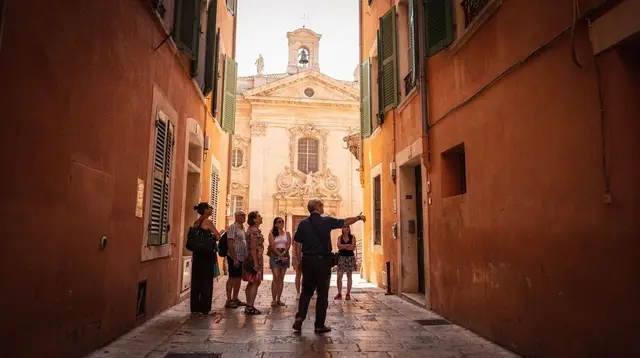
a walking tour through the old town built around food tastings typically covers the market, a handful of small producers, and enough of the old streets to connect the food stops to the wider town. These tours run in small groups, and spots can be limited in July and August, so booking a day or two ahead is worth doing rather than hoping to join on the spot.
If tasting matters less to you than simply understanding the layout of the old town, streets, and history around the market, a two-hour walking tour with a local guide covers more ground on foot without being built around a set list of tastings, useful if you already plan to eat at a restaurant later.
The old town and ramparts around the market
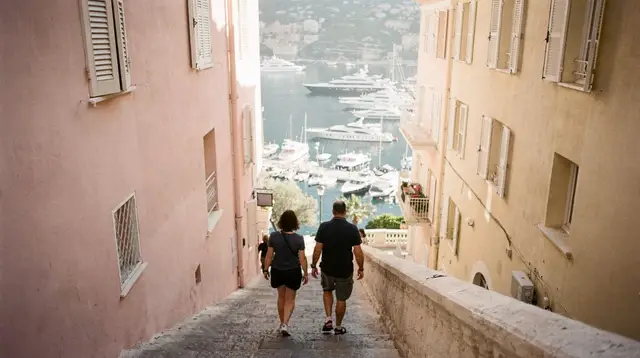
The market sits inside a compact old town of narrow streets, ochre and pale stone facades, and small squares that rarely appear in the same photo twice as the market itself. From the market it is a short walk to the ramparts overlooking the sea, where the old fortifications face the water rather than the modern port. Walking the rampart path gives a different rhythm from the market — quiet, open, with the sea on one side and the old town wall on the other — and it is easy to combine both in a single morning.
Port Vauban, the large marina on the other side of the old town, is worth a glance for scale — one of the larger pleasure-boat harbours on this stretch of coast — but it is not a food destination in itself. The market and the ramparts remain the reason to build a morning specifically around Antibes rather than passing through on the way to somewhere else.
What to eat, and where the flavours come from
Nice and the wider Riviera share a food culture rooted in olive oil, herbs, citrus and simple preparations, and Antibes’ market reflects that shared base with its own emphasis on fish and the produce of the immediate hinterland. Socca — a thin chickpea-flour pancake cooked hot and eaten plain — appears at stalls and small counters, alongside pissaladière, an onion tart topped with anchovy and black olives. Tapenade, made from olives, capers and anchovy, is sold by the jar at nearly every stall and makes a compact souvenir that survives travel well.
Cheese counters lean toward fresh and aged goat cheeses from producers in the Alpes-Maritimes hinterland, sold in rounds of varying age and firmness. Fish stalls, closer to the port side of the market, sell what came in that morning — worth a look even if you have no kitchen, simply to see what is in season. If wine interests you alongside food, the Provence and Bellet wine guide covers the region’s wine beyond what a market visit alone will show.
Table: getting a feel for a market visit
| What you want | Time needed | Best approach |
|---|---|---|
| Quick look at the market | 30–45 minutes | Browse alone, arrive before 10am |
| Market plus tastings | 2–3 hours | Guided tasting walk with a small group |
| Market plus old town and ramparts | Half a day | Combine a market tour with a walk along the ramparts |
| Market plus a full Antibes visit | Full day | Add the old town walking tour and time at the port |
Prices for guided tastings and small-group walks vary with the season and group size; expect them to run higher in July and August than in shoulder-season months, and to include several tastings across the tour rather than a single sit-down meal.
Antibes between Cannes and Nice
Antibes sits on the coast between Cannes and Nice, which makes it easy to fold into a day that also touches one or both neighbours — the Cannes food tours guide covers a different market entirely, built around the Forville market and the Croisette rather than the Provençal market and ramparts here. The two towns share a coastal food culture but keep distinct identities: Cannes leans toward its festival glamour and the Croisette, while Antibes keeps its old town and market at a slower, more local pace.
For a day trip that pairs the two towns and adds the Lérins Islands, the Cannes, Antibes and the Lérins Islands in two days itinerary lays out a workable order. If Antibes is your only stop from a Nice base, the Antibes day trip from Nice guide covers the wider visit beyond food, including the ramparts and old town at a slower pace.
Beyond the market: old town walks, boats and bikes
Food is the anchor of this guide, but Antibes rewards more time than a single market visit. The Antibes old town walking tours guide covers the streets and history around the market in more depth, useful if a food tour leaves you wanting a longer, slower walk afterward. For a view of the old town and ramparts from the water, the Antibes boat tours guide shows the coastline from a different angle, and pairs naturally with a morning at the market followed by an afternoon on the water.
If you would rather cover more ground with less walking, the Antibes bike and scooter tours guide covers a faster way to link the market, the ramparts and the port without retracing your steps on foot.
a private yacht tour along the Antibes coastline is a different kind of afternoon after a market morning — worth considering if you want to see Port Vauban and the Cap d’Antibes coastline from the water rather than from the rampart path.
Restaurant etiquette and practical notes
Service is included on French restaurant and café bills, and tipping beyond that is optional rather than expected — the same rule applies at Antibes market stalls and cafés as anywhere on the coast; the tipping and restaurant etiquette on the Riviera page covers this in more detail. A handful of French phrases go a long way at market stalls where English is not always spoken fluently; the French phrases for the Riviera page has the basics worth learning before a market visit.
Cash is still useful at smaller stalls, even though cards are widely accepted at shops and restaurants. Bring a bag or basket if you plan to buy produce, since not every stall provides one. If the market’s specific ingredients and dishes interest you as part of a wider look at Riviera food, the Nice food guide: what to eat page covers socca, pan bagnat and salade niçoise in more depth than fits here, and the two guides overlap on ingredients while staying distinct on setting.
When to go
Weekday mornings, arriving close to opening, give the calmest version of the market and the best chance at fresh stock before the busiest stalls sell out of specific items. Weekend mornings, especially in summer, bring more shoppers and a livelier but more crowded atmosphere. If a guided tasting tour is part of the plan, booking a day or two ahead during July and August avoids arriving to find the small-group slots already taken. Outside summer, a walk-up booking or same-day spot is usually easier to find.
a private half-day tour from Nice covering Antibes is a useful option if you would rather combine market time with a longer look at the town on a schedule built around your day rather than a fixed group departure.
Questions about food and market tours in Antibes
What days is the Antibes market open?
The covered Provençal market in the old town runs most mornings, closing on Mondays outside peak summer months. In July and August it often opens daily; check locally, as days can shift by season.
Is a guided food tour worth it compared to browsing the market alone?
A guide gets you past the language barrier at small stalls, explains regional products like socca batter, tapenade and local cheeses, and usually includes tastings you would not order on your own. Solo browsing is free and works well if you already know what you are looking at.
How long does a market and food tour of Antibes take?
Most guided walking tours with tastings run two to three hours, covering the market, the old town streets and a stretch of the ramparts. A self-guided visit can be shorter if you only want to see the stalls.
Can I combine an Antibes food tour with Cannes or Nice?
Yes. Antibes sits between Cannes and Nice, and some day tours pair Antibes with Cannes on the same outing. If you are based in Nice, plan the market visit for the morning, since stalls close around midday.
What local dishes should I look for at the Antibes market?
Look for socca, tapenade, pissaladière, fresh goat cheese, olives cured several ways, and seasonal produce from the Alpes-Maritimes hinterland. Vendors selling honey and herbes de Provence are common as well.
Is the Antibes market touristy or a real local market?
It is a working local market that also draws visitors, especially in summer. Early mornings on weekdays feel the most local; midday in August is the most crowded with tourists.
Do I need to book a food tasting tour in advance?
Small-group tastings and walking tours often have limited spots, especially in July and August, so booking a day or two ahead is safer than showing up and hoping for space.
Food and wine tastings across the Riviera
Verified deep-linked GetYourGuide tours. Book through these links and we earn a small commission at no cost to you.
GetYourGuide does not provide a product photo for this activity — the image shows the meeting point, photographed by us.