Monaco, Menton and the Italian Riviera in two days
Most Riviera itineraries stop at Menton, treat it as the end of the line, and turn back toward Nice. This one keeps going. Two days, one train line, one direction: east from Nice, through a country that isn’t part of the EU, past the last French town, and over an invisible border into Italy. No car needed — the coastal TER does the work, and the whole route from Nice to Vintimille takes about an hour end to end.
Why this route, not the corniches
The three corniches above Monaco — with Èze’s perched village and the panoramas from La Turbie — are a different itinerary, built around scenery and elevation. This one is built around the frontier itself: what changes, and what doesn’t, when you cross from France into a sovereign microstate, and then from that microstate back into France, and then out of France altogether. If you want cliff-edge views, see Èze day trip from Nice instead. If you want the story of a border crossed twice by train in under 48 hours, keep reading.
The confusion to clear up before you go
Monaco is not French. It’s a sovereign state of about 2 square kilometres, wedged into the coast east of Nice, with its own Prince, its own police, and its own postage stamps. It uses the euro and shares the customs union with France, which is why there’s no checkpoint, no passport stamp, and no sense of “leaving” as you step off the train at Monaco-Monaco Gare. That absence of a border post is precisely why so many visitors assume Monaco is simply a fancy French neighbourhood. It isn’t — it’s a different country you can walk into.
The second mix-up is Monte-Carlo. Monte-Carlo is not Monaco’s capital; it’s one district within it, the one with the Casino, the Hôtel de Paris and the manicured gardens that show up in every postcard. The real seat of government is Monaco-Ville, the old town on the Rocher, where the Prince’s Palace, the cathedral (Grace Kelly’s tomb is inside) and the Oceanographic Museum all sit above the harbour. Confusing the two is like calling all of Paris “Montmartre.” For transport options into the principality, see Nice to Monaco transport options.
Day 1: Monaco-Ville, the Palace, and the sea
Morning — Nice to Monaco by train. Catch an early TER from Nice-Ville; the ride along the coast takes 20-25 minutes and the train itself is part of the experience, threading in and out of tunnels with sea views opening up between them. For background on how the line works, see the French Riviera by train (TER) guide.
From Monaco’s station, it’s a walk (with some escalators and lifts built into the hillside) up to Monaco-Ville on the Rocher. Aim to arrive before 11:30am: the changing of the guard at the Prince’s Palace happens daily at 11:55am and draws a crowd in summer. It’s a brief ceremony — about ten minutes — but it anchors the morning and gives you a reason to be in position early, which also means beating the worst of the heat on the open terrace.
After the ceremony, the Palace’s State Apartments are open to visitors much of the year (check seasonal hours before you go), and the old town around it — narrow lanes, the cathedral, a genuinely quiet corner of Monaco once the crowd disperses — rewards an unhurried hour. For a guided version of this quarter, see Monaco walking tours.
Early afternoon — Musée océanographique. Perched on the cliff edge below Monaco-Ville, the Musée océanographique (Oceanographic Museum) is one of the oldest of its kind in Europe, with an aquarium level and rooftop terrace views back toward the Rocher. Budget 90 minutes to two hours if you want to see it properly rather than rush through.
Late afternoon — the harbour and, optionally, Monte-Carlo. Walk down to Port Hercule to see the yachts up close, then, if you have the energy, cross to Monte-Carlo proper for a look at the Casino building (entry from age 18, passport required, and a dress code applies past the atrium) and the gardens around the Casino square. You don’t need to gamble, or even go in, to appreciate the architecture from outside. For the full etiquette rundown, see Monte-Carlo Casino dress code and visit.
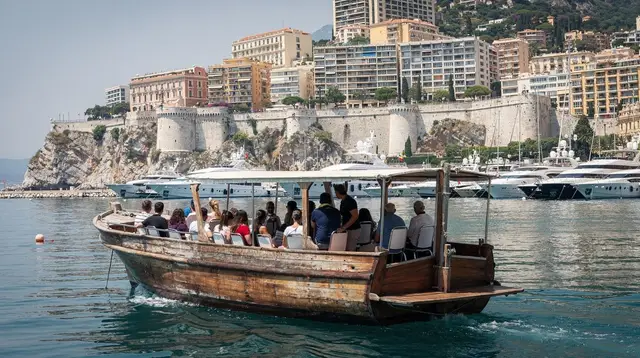
Seeing Monaco from the water rather than the shore is a genuinely different experience — the Rocher, the harbour and the cliffside apartment blocks all read differently from a boat.
a guided day tour that covers Monaco and Monte-Carlo from Nice is one way to do this with commentary built in, or take a shorter two-hour cruise along the coast to Monaco if you’d rather see the principality from the sea before heading back to the train.
Overnight: either stay in Menton (recommended, since it puts you closer to Day 2’s border crossing) or head back to Nice and take the train out again in the morning. If Monaco itself has caught your interest for longer, see Monaco day trip from Nice for a version built around a single full day there instead.
Day 2: Menton, then across into Italy
Morning — Menton. From Monaco (or Nice), the TER continues east to Menton, the last French town before Italy, about 10 minutes past Monaco by train. Menton is smaller and slower than Monaco or Nice, and it’s built its identity around lemons — the town grows them year-round in a microclimate sheltered by the surrounding hills, and celebrates them each February-March at the Fête du Citron. Even outside festival season, the covered market and the citrus-scented gardens are worth the stop.
Spend the morning in Menton’s old town: the pastel façades climbing toward the Basilique Saint-Michel, the small Musée Jean Cocteau on the seafront, and the Cours du 4 Septembre with sea views on both sides. For more on the town, see Menton day trip from Nice, and for what to eat, Menton food and wine tours.
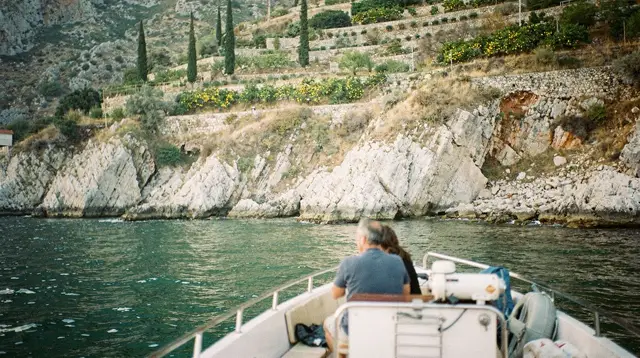
If you’d rather see this stretch of coast from the water, a private boat charter with a skipper out of Menton covers the coastline between Menton and the Italian border in a couple of hours.
Midday — cross the border. This is the actual point of the trip. From Menton-Garavan, the last French station, the TER continues just a few more minutes to Vintimille (Ventimiglia) — the first town in Italy, and the start of the Italian Riviera, in the region of Liguria. There’s no checkpoint, no passport control (both countries are in the Schengen Area), just a change of announcements on the train from French to Italian and, once you step off, a shift in prices, coffee and shop signage that makes the crossing obvious even without a border post.
On Fridays, Vintimille hosts a large market along the Roya riverbank — produce, clothing, leather goods, household items — that draws day-trippers from across the Riviera. It’s touristy in parts but genuinely useful for cheap finds, and it’s the easiest way to feel the difference between France and Italy in under an hour from Nice. See Italian Riviera day trip from Nice for more on planning this leg. If your visit doesn’t land on a Friday, Vintimille’s old town above the market street is still worth a walk.
Afternoon — Sanremo or Dolceacqua. With the rest of the day, two options branch off:
- Sanremo, a proper Italian resort town about 30 minutes further by train from Vintimille, known for its Art Nouveau seafront, the Ariston theatre (home to Italy’s biggest song festival) and a casino of its own. It takes longer to reach and suits travellers who want an afternoon of Italy rather than a market stop.
- Dolceacqua, a small medieval village inland from Vintimille, with a humpbacked stone bridge, a ruined castle above the rooftops, and streets narrow enough that not much has changed in centuries. It requires a bus or taxi from Vintimille rather than a direct train, so budget extra time.
A guided option covers both threads without the logistics: a private tour combining Menton with a taste of Italian dolce vita across the border, or, for something more specific to Dolceacqua’s setting, a visit to sculpture gardens and an art studio on the Italian Riviera.
Evening — back to Nice. The same TER line runs back the way you came; from Vintimille to Nice is roughly an hour, so plan to be on a train by early evening if you want daylight for the ride back along the coast.
Two days at a glance
| Day | Morning | Afternoon | Evening |
|---|---|---|---|
| Day 1 | Train to Monaco; Monaco-Ville and the 11:55am changing of the guard | Musée océanographique; Port Hercule and Monte-Carlo | Overnight in Menton or back to Nice |
| Day 2 | Train to Menton; old town and Basilique Saint-Michel | Cross the border to Vintimille (market on Fridays); optional Sanremo or Dolceacqua | Train back to Nice |
Costs and timing
| Item | Approximate cost | Notes |
|---|---|---|
| Nice–Monaco TER (one way) | €4-6 | 20-25 minutes |
| Monaco–Menton TER (one way) | €2-3 | About 10 minutes |
| Menton–Vintimille TER (one way) | €2-4 | A few minutes; cross-border fare |
| Musée océanographique entry | €18-30 | Varies by season and age |
| Prince’s Palace State Apartments | €10-15 | Seasonal opening; check before visiting |
| Vintimille–Sanremo onward train | €3-5 | About 30 minutes further |
Two rail days like this cost far less than a rental car, parking in Monaco (notoriously tight and pricey), and fuel — and the train removes any temptation to drive into a country whose road signs, at least for the last stretch, are no longer in French.
Honest notes before you go
Monaco’s changing of the guard is short — don’t build your whole morning around it, build your morning around the Rocher and let the ceremony be one stop within it. The Musée océanographique gets busy with school groups in term time; go right at opening if you can. Menton is genuinely quieter than Monaco or Nice, which is part of its appeal, but it also means fewer late-opening restaurants — plan dinner before 9pm if staying over. The Vintimille market is worth seeing once; it is not, on its own, worth restructuring the whole trip around if you’re not there on a Friday. And Sanremo, while pleasant, is enough further away that it can turn Day 2 into a rush — Dolceacqua or a slower Vintimille afternoon suits travellers without a car better.
If two countries in two days is the right pace, pair this itinerary with a day in Nice itself before or after using One day in Nice, or, for a longer stay along the same coastal train line without ever renting a car, see French Riviera without a car.
Frequently asked questions about the Monaco–Menton–Italy border route
Is Monaco part of the European Union?
No. Monaco is a sovereign state of about 2 square kilometres, not an EU member, though it uses the euro and has no customs or passport control on its border with France. Coming from Nice, you simply arrive — there is no checkpoint.
Is Monte-Carlo the capital of Monaco?
No. Monte-Carlo is a district of Monaco, home to the Casino and the Hôtel de Paris. The actual capital is Monaco-Ville, the older quarter on the Rocher, where the Prince’s Palace and the cathedral stand.
How do you get from Nice to Monaco without a car?
The TER train from Nice-Ville to Monaco-Monaco Gare takes about 20-25 minutes and runs frequently along the coast. Buses on the Lignes d’Azur network also connect the two, though the train is faster and simpler for this itinerary.
Does Monaco have its own airport?
No. Monaco has no airport of its own. Visitors fly into Nice Côte d’Azur (NCE) and continue by train, bus, car, or a short helicopter hop to Monaco’s Fontvieille heliport.
What time is the changing of the guard in Monaco?
The ceremony takes place outside the Prince’s Palace in Monaco-Ville at 11:55am, daily, and lasts about ten minutes. Arrive 15-20 minutes early in summer, since the terrace in front of the Palace fills up.
Where does the French Riviera end and Italy begin?
The Côte d’Azur ends at Menton, the last French town before the border. Vintimille (Ventimiglia in Italian) is the first town across the frontier, roughly 10 minutes further by train, and marks the start of the Italian Riviera in Liguria.
Is Vintimille or Sanremo worth the trip from Nice?
Vintimille’s Friday market is the easier half-day trip, about an hour from Nice by train, with cheap produce, clothing and leather goods along the Roya riverbank. Sanremo takes longer to reach and suits travellers who want a proper Italian town rather than a market outing.
Do you need a visa to cross from France into Italy at Menton?
No visa is needed for most travellers. Both countries are in the Schengen Area, so the crossing at the Menton-Vintimille frontier involves no checkpoint for anyone already legally in France — just a change of language, prices and, often, a change of train.
tours.2 days
Verified deep-linked GetYourGuide tours. Book through these links and we earn a small commission at no cost to you.
GetYourGuide does not provide a product photo for this activity — the image shows the meeting point, photographed by us.