One week on the French Riviera: coast and hinterland
Seven days is enough to do something the shorter Riviera itineraries can’t: leave the coastal train line and get into the hinterland. Saint-Paul-de-Vence and Grasse both sit above the coast, both are thin on public transport, and both reward a car for exactly two of these seven days — no more.
The other five days work better without one. Nice’s old town has no useful parking near it, the city runs a low-emission zone that some older rental cars can’t enter, and every coastal town from Villefranche to Cannes sits on the same TER line. Renting for the full week means paying for a car that spends five days looking for a space. This itinerary loops instead of shuttling back and forth: two days in Nice, three days working the coast by train and boat, and two inland days with the car picked up specifically for that leg.
Day 1: settling into Nice
Arrive via Nice — most flights land at Nice Côte d’Azur (NCE), about 7km west of the centre, and the tram (lines 2 and 3) covers that distance in 20–25 minutes for a few euros, which is simpler than a taxi in afternoon traffic. Spend the rest of the day on foot in Vieux-Nice: ochre facades, baroque churches, and the Cours Saleya market, which runs flowers and produce Tuesday to Sunday mornings and shifts to a brocante on Mondays. Lunch on socca and pan bagnat rather than a sit-down menu — it’s the honest way to eat in this neighbourhood.
In the late afternoon, walk the Promenade des Anglais, the roughly 7km seafront stretch along the Baie des Anges. The beach here is pebble, not sand — bring water shoes if you plan to swim, or wait for Antibes and Cannes later in the week for sand. Finish at Place Masséna as the fountains light up.
Day 2: Nice’s museums and viewpoints
No car needed today either. Start at Cimiez, a tram or bus ride uphill, for the Musée Matisse and the Roman ruins and arena beside it. Come back down toward the Musée national Marc Chagall before lunch — both museums are compact enough to see in a morning without rushing.
In the afternoon, climb the Colline du Château: there’s no château left, just ruins, a park, an artificial waterfall, and the best view in Nice over the bay and the Port Lympia below, where ferries leave for Corsica. Walk down to the port for an early evening drink among the working boats rather than the tourist strip. This closes out the Nice portion of the week — from here the itinerary moves along the coast.
Day 3: Villefranche, Cap Ferrat and Èze
Take the TER train (10–15 minutes) to Villefranche-sur-Mer, a deep natural harbour with a small Cocteau-decorated chapel by the water. From there, walk or bus to Saint-Jean-Cap-Ferrat for the Villa Ephrussi de Rothschild and its gardens — allow at least two hours, more if the coastal path around the cape tempts you.
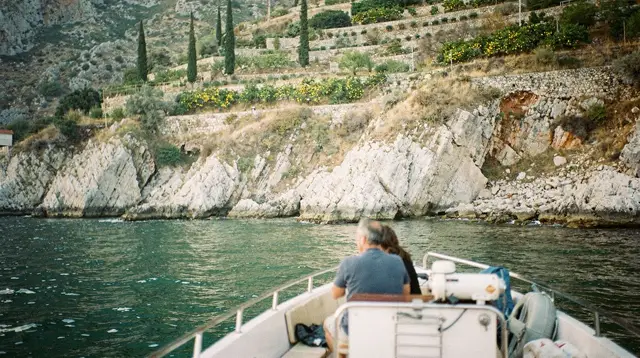
a boat trip that stops at Villefranche’s harbour on the way along the coast is a good way to see this stretch from the water rather than from a train window, if the schedule lines up with your morning.
In the afternoon, head up to Èze, reached by bus along the Moyenne Corniche or a short taxi. It’s a genuinely steep village — the exotic garden at the top has sweeping views, but by midday in summer the lanes are packed with coach groups, so go early or treat the crowd as part of the deal. The path down to Èze-sur-Mer (sometimes called the Nietzsche path) is about an hour of steep walking; skip it if your knees or your schedule say no, and take the bus back down instead.
a guided two-hour walk through Èze’s medieval lanes and garden is worth booking if you want the history rather than just the view.
Day 4: Monaco and Menton
Train again — Nice to Monaco is about 20–25 minutes. Monaco is a sovereign principality, not part of the European Union, though it uses the euro and has no border control with France. Its capital is Monaco (Monaco-Ville, on the Rocher, with the Palais princier and the cathedral) — Monte-Carlo is a district, not the capital, home to the Casino and the Opéra. Time the morning around the changing of the guard outside the Palais, around 11:55am, then walk down to the Musée océanographique.
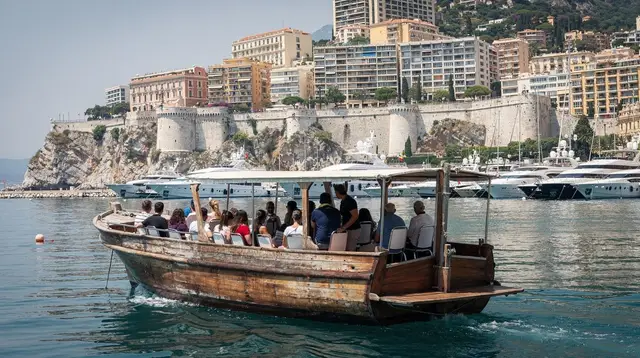
a two-hour boat cruise into Monaco’s harbour gives a different angle on Monte-Carlo’s waterfront than the train does, if you’d rather arrive by sea.
Afternoon: train onward to Menton, the last town before Italy, known for its citrus gardens and the Basilique Saint-Michel. It’s a quieter, less monied version of the coast after Monaco’s polish.
a skippered boat charter out of Menton is an option if you’d rather spend the afternoon on the water than in the old town — book ahead, especially in July and August.
Day 5: Antibes and Cannes
Continue west by train to Antibes, about 40 minutes from Nice. The old town’s ramparts, the Musée Picasso inside the Château Grimaldi, and Fort Carré are all walkable from the station, and the Provençal market at the covered hall is worth timing lunch around. Antibes and neighbouring Juan-les-Pins also have proper sand beaches, unlike Nice.
In the afternoon, push on to Cannes, another 15–20 minutes by train. Walk La Croisette, then climb into Le Suquet, the old hill town above the harbour, for the view back over the bay. If the Palais des Festivals looks unremarkable outside of May, that’s normal — the Cannes Film Festival is the reason it exists, and the rest of the year it’s just a conference centre.
Day 6: picking up the car for Saint-Paul-de-Vence
This is where the car becomes useful, and where this itinerary earns its “with car” label. Collect a rental this morning, not before — a car parked in Nice for five idle days is money and stress for nothing, and the city’s low-emission zone can bar older diesel vehicles from entering at all.
Drive up to Saint-Paul-de-Vence, about 30–40 minutes from Nice depending on traffic. Public buses reach it too, but they’re infrequent enough that a car saves real time on a day that also includes Grasse. Walk the ramparts and gallery-lined lanes, then head to the Fondation Maeght for its modern art collection and sculpture garden. Like Èze, this village is at its worst between 11am and 4pm in summer — arriving by 9am or 10am makes a real difference. This is one of the harder-to-reach stops on the whole Riviera, which is exactly why a short-format day trip usually skips it and this longer loop doesn’t.
Day 7: Grasse and the perfume houses
Drive on to Grasse, roughly 30–40 minutes further, France’s perfume capital. The factory tours at Fragonard, Galimard and Molinard are free and don’t require booking — worth doing at least one, ideally the one with the smallest coach-tour crowd that morning. These are different from the hands-on perfume-creation workshops, which are paid, run by appointment, and should be reserved days ahead if you want to build your own scent rather than just watch the process.
a guided day covering several of these coastal towns in one loop is a useful alternative if you’d rather not drive at all this week — it won’t reach Grasse or Saint-Paul-de-Vence, but it fills in everything else.
Return the car in Nice in the late afternoon before your onward journey — Nice Côte d’Azur airport has rental drop-off points at both terminals, or drop it in the city and take the tram to the airport if you’re flying out. Grasse’s rose harvest runs through May, and jasmine into autumn, so the fields won’t be in bloom for a September or October trip, but the perfume houses themselves run year-round.
Planning this week: car days versus train days
| Day | Focus | Transport |
|---|---|---|
| 1 | Nice old town, Promenade des Anglais | On foot / tram from airport |
| 2 | Cimiez, Matisse and Chagall museums, Colline du Château | On foot / tram |
| 3 | Villefranche, Cap Ferrat, Èze | TER train, local bus |
| 4 | Monaco, Menton | TER train |
| 5 | Antibes, Cannes | TER train |
| 6 | Saint-Paul-de-Vence | Rental car |
| 7 | Grasse, return car | Rental car |
Budget roughly €90–150 per person per day mid-range, more on the two boat or car days, less on museum-and-market days. A weekly car rental for two days’ actual use, picked up on day 6 and returned on day 7, avoids paying for four idle parking days in Nice.
French Riviera one-week FAQ
Do I need a car for this one-week French Riviera itinerary?
Only for two of the seven days. Nice, Villefranche, Cap Ferrat, Èze, Monaco, Menton, Antibes and Cannes are all reachable by TER train, tram or bus. Saint-Paul-de-Vence and Grasse have thin public transport links, so a rental car (or taxi) is the practical option for those legs.
Can I do this itinerary without a car?
Five of the seven days, yes, using the coastal train. Saint-Paul-de-Vence and Grasse become harder without one: regional buses exist but run infrequently, especially on Sundays. Swap those two days for a guided day trip from Nice if you would rather not drive at all.
How difficult is a week-long French Riviera road trip?
Moderate. It is not physically demanding, but the days are dense and you are organising your own train times, boat departures and, for two days, driving on the corniches. Expect at least one long queue (Èze, Saint-Paul-de-Vence) if you arrive after 11am in summer.
Is Saint-Paul-de-Vence reachable by public transport?
Yes, by bus from Nice or Vence, but services are infrequent and the journey takes close to an hour each way. A car or a pre-booked day trip cuts that to about 30 minutes and lets you combine it with Grasse the same day.
Are the Grasse perfume house tours free?
The factory tours at Fragonard, Galimard and Molinard are free and don’t need advance booking, though arriving early avoids the coach groups. Hands-on workshops where you create your own perfume are a separate, paid activity and should be reserved ahead.
What’s the best way to see Nice, Monaco, and Cannes without driving?
The TER coastal train links all three, plus Villefranche, Beaulieu, Èze-sur-Mer, Antibes and Menton, in one line. It’s the single most useful transport pass of the week and removes any need for a car on those days.
Where should I park when I do pick up the car?
Collect it on the morning you leave for Saint-Paul-de-Vence, not before. Parking in central Nice is scarce and metered, and the city’s low-emission zone restricts older vehicles, so a car sitting idle for four days in Nice is pure cost and hassle.
tours.7 days
Verified deep-linked GetYourGuide tours. Book through these links and we earn a small commission at no cost to you.
GetYourGuide does not provide a product photo for this activity — the image shows the meeting point, photographed by us.