A coastal stop, not a hilltop village
The Basse Corniche, the lowest of the three roads that run from Nice toward Italy, hugs the shoreline the whole way. It is easy to mix up Villefranche-sur-Mer with the perched villages further along the coast — Èze, for instance, sits on a rock nearly 430 metres above the sea. Villefranche does the opposite: it sits at sea level, wrapped around one of the deepest natural harbours on the Mediterranean, and its neighbour Saint-Jean-Cap-Ferrat is a low, wooded peninsula rather than a summit. If you want dramatic views from above, Èze day trips or the best viewpoints on the French Riviera cover that. This stretch is about the water, the gardens, and one small chapel.
The two places read as a single outing along the coast road: Villefranche’s old town and harbour first, then Cap Ferrat’s villa and coastal path a short distance further east, with Beaulieu-sur-Mer just beyond as an easy extension of the same trip. None of it requires a car — the coastal TER train stops at Villefranche-sur-Mer and at Beaulieu-sur-Mer, and both sit on the same line out of Nice-Ville.
Villefranche-sur-Mer: a deep harbour and an old town
What sets Villefranche apart on this coast is its rade, a bay deep enough that large cruise ships anchor offshore and tender passengers in by small boat. It has been used this way for a long time, and the harbour still fills with a mix of pleasure yachts, fishing boats, and the occasional liner sitting well out from shore. Walk the waterfront and you get one of the better views back toward Nice’s Mont Boron and across to Cap Ferrat.
The old town climbs in narrow, stepped streets behind the harbour — tall, colourful houses, vaulted passages (the Rue Obscure runs almost entirely underground), and small squares that stay shaded through the afternoon. It is compact enough to see on foot in an hour, longer if you stop for lunch on the quay.
The one sight most visitors specifically come for is the Chapelle Saint-Pierre, a small 14th-century fishermen’s chapel on the harbour that Jean Cocteau decorated in the 1950s with frescoes covering its interior walls — scenes from the life of Saint Peter alongside more personal, dreamlike imagery. It is a short visit, usually 15 to 20 minutes, but it is genuinely worth the small entry fee if art or Cocteau’s work interests you; check opening days before you go, since it closes on Mondays and for a midday break.
A useful nuance for anyone choosing between towns: Villefranche’s main beach is sand and fine gravel, not the pebbles you’ll find along the Promenade des Anglais in Nice. If shoe-free swimming matters to your plans, that is a real point in Villefranche’s favour over the city beaches.
Villefranche from the water
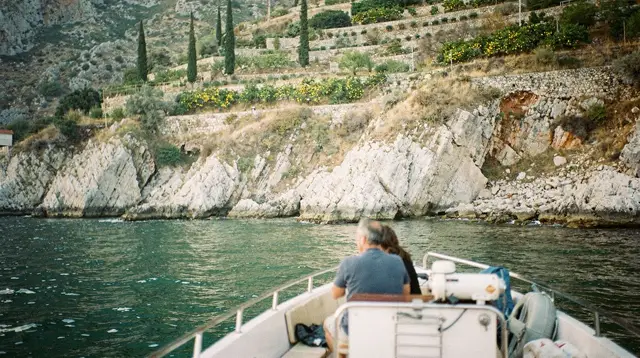
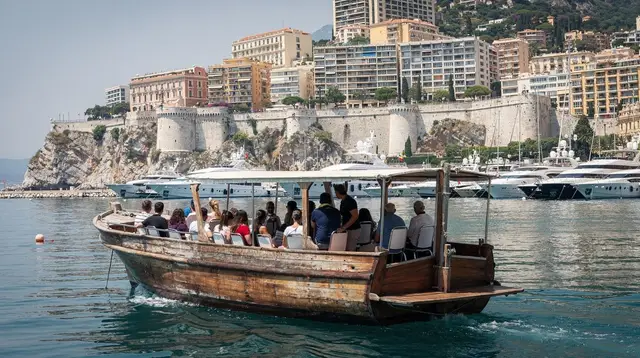
Because the harbour is so central to the town, a short boat trip is one of the more natural ways to see it — and to get a look at Cap Ferrat’s shoreline and the villas along it that you can’t fully appreciate from the coast road. A boat tour that stops along the Villefranche coastline covers this without requiring a full day, and a private boat trip from Villefranche with time to snorkel works well if swimming off the boat appeals more than a fixed itinerary. For a longer route that continues toward Monaco, a coastal cruise from Villefranche-sur-Mer to Monaco links this stretch to the next one without doubling back by road.
Saint-Jean-Cap-Ferrat: gardens above the water
East of Villefranche, the coast road curves out onto the Cap Ferrat peninsula, a strip of pine woods and walled villas between two small bays. It has been a favourite address for a long list of wealthy residents over the past century, and the one property open to the public shows why.
The Villa Ephrussi de Rothschild, built in the early 1900s for Béatrice de Rothschild, sits near the top of the peninsula with views to both sides. The house itself holds furniture, porcelain, and art collected across decades; the real draw for most visitors is outside, in nine themed gardens — French formal, Spanish, Florentine, Japanese, exotic, and more — laid out around the villa on a narrow ridge with the sea visible from several points. Give it at least 90 minutes if you want to walk the gardens properly rather than rush them.
| What | Typical detail |
|---|---|
| Villa Ephrussi de Rothschild | Villa and museum rooms plus nine themed gardens |
| Suggested visit length | 1.5–2.5 hours |
| Best light | Morning, before coach groups arrive |
| Closed | Some Mondays outside peak season — check before visiting |
A guided option that folds this villa into a wider look at the bay is the private tour covering Villefranche and its bay, useful if you’d rather have a driver-guide handle the stops than manage trains and timing yourself.
The coastal path
Below the villa, Cap Ferrat has a genuine sentier du littoral — a coastal footpath that circles much of the peninsula at close to sea level, alternating between rocky shoreline, small coves, and stretches through pine trees behind private villa walls. It’s flat, well marked, and free, and it is one of the more pleasant short walks on this part of the coast precisely because it stays low, unlike the steeper paths around Èze. Plan on two to three hours to circle a good portion of the peninsula, with no technical difficulty, though there is little shade at midday in summer.
Beaulieu-sur-Mer: an easy extension
The same coastal train and coast road continue past Cap Ferrat to Beaulieu-sur-Mer, a small resort town tucked into a sheltered bay that stays notably mild even in winter. Its own draw is the Villa Kérylos, a house built in the early 20th century as a precise reconstruction of an ancient Greek villa, down to the furniture and mosaics. It is a shorter, more focused visit than the Ephrussi gardens and pairs naturally with a Villefranche–Cap Ferrat day if you have time to spare, since all three towns sit on the same short run of coastline and the same train line. This guide keeps its focus on Villefranche and Cap Ferrat; Beaulieu, along with Èze and Monaco further along the same corniche, gets fuller treatment elsewhere in this guide’s Eastern Riviera coverage.
Driving there versus taking the train
The Basse Corniche is a scenic route by car, hugging the shoreline the whole way from Nice, but Villefranche-sur-Mer and Cap Ferrat are two of the easiest Riviera stops to reach without driving at all. The coastal TER train from Nice-Ville takes only a few minutes to Villefranche-sur-Mer and continues on to Beaulieu-sur-Mer, so anyone weighing whether to rent a car for the day is usually better off leaving it in Nice for this particular trip.
Parking in Villefranche’s old town is limited, and the harbour car parks fill quickly once cruise ships are in and tender traffic picks up, which pushes both the search time and the price up together. If a car is part of your wider Riviera plans — reaching villages further from a train line, for instance — the guides on driving and parking in Nice and renting a car on the French Riviera cover what to expect. Arriving from the airport, the Nice airport to city centre guide explains the tram connection into town before you pick up the train onward toward Villefranche.
Fitting Villefranche and Cap Ferrat into a longer trip
On its own, Villefranche and Cap Ferrat make a comfortable half-day to full-day outing from Nice, easily combined with Beaulieu-sur-Mer on the same train line. Travellers with more time often fold it into a wider look at the eastern corniche, pairing it with Èze and Monaco on a longer day, or spreading the three towns across a two-day stay based in Nice. For a longer visit to the region, the five-day French Riviera itinerary and the one-week French Riviera itinerary both place a Villefranche–Cap Ferrat morning alongside Nice’s old town, Cannes, and the perched villages further west.
If you’re still deciding when to come, the best time to visit Nice applies just as well here: the coast is at its busiest and most expensive in July and August, when cruise calls and beach crowds overlap, while late spring and September keep the same mild weather with noticeably thinner crowds at the Villa Ephrussi gardens and on the coastal path. Winters on this stretch stay mild for the coast — Beaulieu-sur-Mer in particular is known for its sheltered bay — though the peninsula’s coastal path and Villefranche’s old-town streets offer far less shade if you visit in the height of summer heat.
Practicalities
Both Villefranche-sur-Mer and Beaulieu-sur-Mer have their own stations on the coastal TER line, making this one of the easier stretches of coast to see without a car — the Nice tram and transport guide and the coastal train guide cover connections in more detail. The coast road itself can back up in summer, particularly when cruise ships are in port and tender traffic adds to the harbour crowds, so the train is usually the less stressful option on a busy day.
Cruise passengers should note that Villefranche is a genuine tender port: ships anchor in the bay and shuttle passengers to the harbour by small boat, which means the town itself can feel busy for a few hours around each arrival and quieter once the ships move on. If you’re staying in Nice and want the visit without the cruise crowds, aim for a morning departure before the first tenders land.
For anyone weighing where to base a stay rather than just visit for the day, the comparison between Menton and Villefranche-sur-Mer covers the trade-offs — Villefranche is quieter and closer to Nice, Menton sits further along toward Italy with its own citrus-scented character. A private, customisable option that starts from the port itself is the private shore excursion from Villefranche, built around your own schedule, aimed specifically at cruise passengers with a fixed return time.
If you’re combining this stop with the rest of the eastern corniche in one trip, the two-day Monaco, Menton and Italian Riviera itinerary and the wider things to do around Villefranche and Cap Ferrat page both help with sequencing. Related reading on the harbour and the coastal path: Villa Ephrussi de Rothschild visit guide, the Cap Ferrat coastal path walk, and, for the beach question specifically, pebble beaches in Nice: what to expect, which explains why Villefranche’s sand-and-gravel shore is the exception rather than the rule on this coast.
Villefranche and Cap Ferrat: questions before you go
Is Villefranche-sur-Mer the same as Cap Ferrat?
No. They are two adjoining places on the same stretch of coast, connected by a short walk or a couple of minutes’ drive. Villefranche is the harbour town with the old town and the Cocteau chapel; Cap Ferrat is the wooded peninsula next door, home to the Villa Ephrussi de Rothschild and the coastal path.
Is Villefranche-sur-Mer beach sand or pebbles?
The main town beach is sand and fine gravel, unlike the pebble beaches that run along most of the Promenade des Anglais in Nice. It’s one of the more comfortable swimming spots on this part of the coast if bare feet on stones isn’t appealing.
How do I get from Nice to Villefranche-sur-Mer without a car?
The coastal TER train stops directly in Villefranche-sur-Mer and takes only a few minutes from Nice-Ville, making it the simplest option; local buses along the Basse Corniche also connect the two.
Is the Villa Ephrussi de Rothschild worth visiting?
Most visitors find the gardens the highlight — nine distinct themed gardens laid out around the villa with sea views from several points — with the house and its collections as a secondary draw. Budget at least 90 minutes.
Can I walk between Villefranche and Cap Ferrat?
Yes, the two are close enough to walk between along the coast road or, more pleasantly, by picking up the coastal path (sentier du littoral) that runs around the Cap Ferrat peninsula at sea level.
Does Villefranche-sur-Mer get cruise ships?
Yes, its deep natural harbour is used as a tender port by cruise lines, with ships anchoring offshore and shuttling passengers in by small boat. The town is busiest in the hours around each arrival.
Should I visit Villefranche and Cap Ferrat together with Èze or Monaco?
They sit on the same Basse Corniche route, so it’s possible to combine them, but Èze’s hilltop village and Monaco’s sights each deserve their own time rather than being squeezed into a rushed add-on to Villefranche and Cap Ferrat.
Is the Chapelle Saint-Pierre in Villefranche worth the entry fee?
If you have any interest in Jean Cocteau’s work or in seeing a small space transformed by a single artist’s hand, yes — it’s a short visit but a distinctive one, and it closes on Mondays, so check the schedule before planning around it.
Do I need a car to visit Villefranche and Cap Ferrat?
No — this is one of the more car-free-friendly stretches of the Riviera. The coastal TER train reaches both Villefranche-sur-Mer and Beaulieu-sur-Mer directly from Nice-Ville, and parking in Villefranche’s old town is limited, especially once cruise ships are in port and the harbour fills with tender traffic.
When is the best time of year to visit Villefranche and Cap Ferrat?
Late spring (May–June) and September offer the mildest crowds alongside dependable Mediterranean weather. July and August bring the warmest sea but the biggest crowds, both at the Villa Ephrussi gardens and along the coastal path, while winter stays comparatively mild on this stretch of coast even though the Alpine valleys inland see snow at the same time of year.