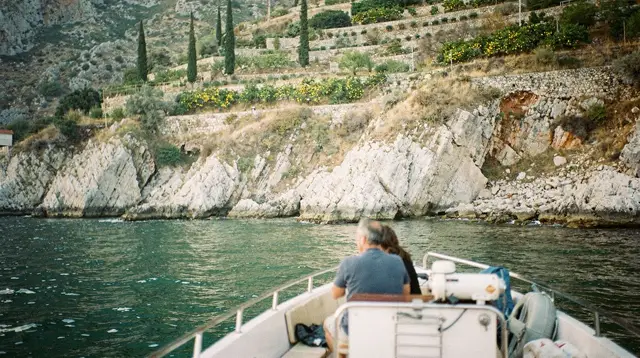
The stretch of coast between Nice and Italy
East of Nice, the coast road splits into three parallel corniches that climb toward the Italian border: the Basse Corniche hugging the water, the Moyenne Corniche running through Èze, and the Grande Corniche riding the ridge above both. Between them sit some of the most photographed places on the Riviera — Villefranche-sur-Mer, Saint-Jean-Cap-Ferrat, Beaulieu-sur-Mer, Èze, Monaco and Monte-Carlo, Roquebrune-Cap-Martin and Menton — strung along roughly 30 km of coastline. None of them is more than 45 minutes from Nice by train or car, which is exactly why this is the most visited, most saturated, and most misunderstood part of the whole guide.
Get one thing straight before anything else, because it trips up more visitors than any other fact on this site: Monaco is a sovereign state, not a French town and not a member of the European Union. It has its own government, its own postage stamps, its own police, and a land area of about 2 km². What it doesn’t have is a land border with France in any meaningful sense — no passport checks, no customs post, because Monaco is in a customs and monetary union with France and uses the euro like everywhere else on this coast.
Its capital is Monaco, the old town on the Rock (Monaco-Ville), with the Prince’s Palace, the cathedral and the Oceanographic Museum. Monte-Carlo is not the capital — it’s a district, built around the casino, the Opéra and the Hôtel de Paris, and treating the two names as interchangeable is the single most common mistake made about this place. And Monaco has no airport: everyone arrives through Nice, by train (about 20-25 minutes from Nice-Ville), by bus, by car, or by helicopter to the heliport at Fontvieille, about seven minutes in the air.
For a first Riviera trip, it helps to know how many days you really need in Nice and along this coast, and if you’re building a full itinerary, our two-day Nice and Riviera plan and our Monaco, Menton and the Italian Riviera in two days route both use this stretch of coast as their backbone.
Villefranche-sur-Mer and Saint-Jean-Cap-Ferrat
The first stop east of Nice is Villefranche-sur-Mer, built around one of the deepest natural harbours on the Mediterranean — deep enough that cruise ships anchor offshore and tender passengers in. The old town is a knot of steep, arcaded lanes (the Rue Obscure runs entirely under buildings), and the small Chapelle Saint-Pierre on the harbour was decorated by Jean Cocteau in the 1950s. It’s a quiet, unhurried place to have lunch looking at the bay, and the beach here is sand and fine gravel rather than the straight pebble of Nice.
Just beyond it, the Saint-Jean-Cap-Ferrat peninsula is where early-20th-century wealth built its villas, and the one to see is the Villa Ephrussi de Rothschild, a pink 1900s mansion surrounded by nine themed gardens (French, Spanish, Florentine, a rose garden and more) that took as much work as the house itself. Around the tip of the peninsula, a public coastal path (the sentier du littoral) loops past the villas’ walls and rocky coves — a genuinely good free walk, roughly two hours if you do the full loop, with no crowds compared to the village itself.
Villefranche and Cap-Ferrat pair well as a single day out from Nice — see our dedicated Villefranche and Cap-Ferrat day trip guide for a suggested order of stops, and read more on the Villa Ephrussi de Rothschild visit and the Cap-Ferrat coastal path walk before you go.
Beaulieu-sur-Mer and Èze
Beaulieu-sur-Mer, the next bay along, holds the Villa Kérylos, a faithful reconstruction of an ancient Greek house built by an early-20th-century archaeologist — mosaic floors, an interior courtyard, a library, right on the water. It’s a smaller, quicker visit than Ephrussi and pairs naturally with a Beaulieu stop.
Èze, the hilltop village visible from the Moyenne Corniche, is the postcard image of this coast: stone lanes climbing to a ruined castle site now occupied by the Jardin exotique, a cactus garden with a genuinely spectacular sea view from about 430 m up. It is also, by mid-morning in summer, extremely crowded — go before 10 am or after 5 pm if you want the lanes to yourself. From the village, the path down to Èze-sur-Mer known as the chemin de Nietzsche (Nietzsche is said to have written part of Thus Spoke Zarathustra on it) drops steeply to the coast in about an hour; it’s a real hike, not a stroll, with loose stone underfoot, and it’s one-way downhill unless you enjoy punishing yourself.
Èze deserves its own planning: our Èze day trip guide covers timing against the crowds in more detail, and if you’re choosing between Riviera villages, see Èze versus Saint-Paul-de-Vence for how the two compare. For the walk down to the coast, read more on the exotic garden and the Nietzsche path.
Monaco and Monte-Carlo
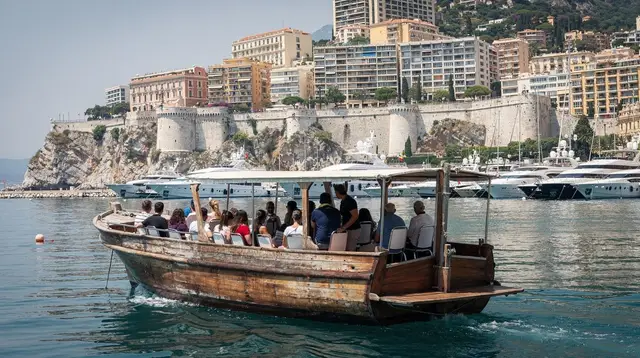
Monaco rewards a full day more than a rushed two hours. In Monaco-Ville, the changing of the guard at the Prince’s Palace happens at around 11:55 am, and the Musée océanographique, perched on the cliff edge, is one of the oldest aquariums in the world. Down at Port Hercule, superyachts line up against a backdrop of high-rises stacked up the hillside — Monaco has nowhere to build except up. Over in Monte-Carlo, the belle-époque Casino de Monte-Carlo is open to visitors as well as gamblers, but the gaming rooms require ID, a minimum age of 18, and a jacket for men in the evening; the atrium and the building’s exterior can be seen without any of that. Between the two districts, Monaco’s public gardens and the Jardin exotique de Monaco (a separate garden from the one in Èze village, easy to confuse) fill in an afternoon.
Getting there without a car is straightforward: the coastal train stops at Monaco-Monte-Carlo station, a short walk or public-lift ride down to the harbour. If you’d rather see it from the water first, a short cruise out of Nice gives a different read on the place — the density of the buildings against the cliff only really makes sense from offshore.
a two-hour boat trip along the coast into Monaco’s harbour is a relaxed way to arrive, and for a longer look, a private sunset tour of the principality times the light for the Rock and the harbour well.
Monaco rewards more planning than most stops on this coast — our Monaco day trip guide lays out a realistic one-day plan, and separate guides cover walking tours of the principality and the dress code for visiting the casino. If cost is a concern, Monaco without breaking the bank has practical ways to visit cheaply.
Roquebrune-Cap-Martin and Menton
Past Monaco, the coast narrows again at Roquebrune-Cap-Martin, whose medieval village clings to the hillside below a 10th-century castle keep — one of the oldest in France — with far fewer visitors than Èze despite a similar setting. The last stop before Italy is Menton, known for its lemons (there’s a whole festival built around them, the Fête du Citron, in February-March), its Italian-tinted old town, the domed Basilique Saint-Michel, and a small Musée Jean Cocteau on the seafront. Menton’s beaches and gardens are noticeably quieter than Monaco’s, and the town has the feel of somewhere that hasn’t fully been discovered yet, even though it’s 30 minutes from Nice by train.
Menton has enough on its own for a proper visit — our Menton day trip guide and the Menton Lemon Festival guide cover the town in more depth. Continuing past Menton into Italy, the Friday market in Ventimiglia and the wider Italian Riviera day trip from Nice pick up where this guide leaves off.
Realistic travel times
| From Nice to… | By train (TER) | By car |
|---|---|---|
| Villefranche-sur-Mer | 8-10 min | 15-20 min |
| Saint-Jean-Cap-Ferrat | train to Beaulieu, then 20 min walk or local bus | 20-25 min |
| Beaulieu-sur-Mer | 12-15 min | 20 min |
| Èze (village, not Èze-sur-Mer) | train to Èze-sur-Mer, then bus or a steep 1-hour climb | 25-30 min via Moyenne Corniche |
| Monaco-Monte-Carlo | 20-25 min | 25-35 min, plus parking |
| Menton | 30-35 min | 35-45 min |
These are point-to-point times, not what it takes to actually see the place once you arrive — budget the visit on top. For the wider picture of getting around without a car, see our guide to the French Riviera by TER train and the general getting around the French Riviera guide.
Can you do it all in one day?
Not comfortably, and no honest guide should pretend otherwise. The tours sold as “Monaco, Èze and the whole Riviera in a day” move fast and leave little room to linger. Monaco plus Èze together already fill a full day without rushing: figure two to three hours in Monaco (palace area, harbour, a museum if you want one), the drive or bus up to Èze, an hour or so in the village and gardens, and you’re back in Nice by early evening. Adding Villefranche or Menton on top of that turns it into a checklist rather than a visit. If you want to see all of the Eastern Riviera properly, split it: Villefranche, Cap-Ferrat and Beaulieu as one gentler day along the coast, then Èze and Monaco as a second, busier one. For a slower alternative, our five days on the French Riviera itinerary spreads this coast over more time instead of compressing it.
a two-hour guided visit of Èze village works well as the anchor for that second day, especially paired with time in Monaco either side of it.
When it’s crowded, and when it isn’t
Èze and Monaco are saturated between about 11 am and 4 pm in July and August — tour buses converge on Èze mid-morning, and Monaco’s harbourside gets dense by midday. Villefranche and Beaulieu stay calmer even in peak season, mostly because they don’t have a single headline sight pulling everyone to the same spot at the same hour. Menton is the quietest of the lot for most of the year, aside from its own festival weeks. Outside summer, the whole stretch is genuinely pleasant: mild winter days in the 12-15°C range, clear light, and none of the queueing.
The Monaco Grand Prix, held in late May or early June, and its qualifying and support-race days close roads across the principality for the better part of a week and send accommodation prices on this whole stretch of coast sharply upward — check the calendar before booking anything nearby in that window. Full details on road closures, ticketing and where to watch from are in our Monaco Grand Prix travel guide.
Beaches, briefly
Like the rest of the coast around Nice, the beaches here are pebble, not sand — Villefranche has a mix of sand and fine gravel that’s a little softer underfoot than Nice’s stones, but don’t expect the wide sandy strand you’d find further west toward Cannes and Antibes. Water shoes make the rocky entries more comfortable almost everywhere along this shore. For a full comparison of where the sand is better, see our best beaches in Nice and along the Riviera guide.
A note on Grasse and the perfume villages
If perfume-making is on your list, note that Grasse and its perfume houses sit inland to the west, not on this eastern stretch — that’s covered separately in the villages section of this guide. That said, a few Grasse-linked experiences do run as combined tours from this side of the coast, pairing an Èze visit with a workshop. The perched villages themselves, including Saint-Paul-de-Vence and Grasse’s perfume houses, get their own full write-up in the best perched villages of the French Riviera guide, and Grasse day trips from Nice covers logistics for getting there directly.
a perfume-making workshop and factory tour at the Fragonard site in Èze is the option to look at if you want that combination without a separate trip to Grasse itself.
Getting around without a car
The coastal TER train line is the easiest way to cover this whole stretch: it runs from Nice through Villefranche, Beaulieu, Èze-sur-Mer, Monaco and Menton, all the way to the Italian border at Vintimille. Stations sit right by the water at most stops, which makes hopping on and off practical for a multi-stop day. A car only really earns its cost if you want to reach Èze village directly (rather than via the lower station and a connecting bus) or plan to continue up onto the Grande Corniche for the viewpoints. Parking in Monaco and central Èze is limited and priced accordingly, so factor that into a driving day. If a car isn’t part of your plan at all, our French Riviera without a car guide plans a full week around exactly this train line, and our tipping and restaurant etiquette guide is worth a quick read before your first lunch stop along the way.
a guided visit focused on Villefranche’s harbour and old town is a good, low-key way to start a corniche day before pushing on toward Èze and Monaco.
The Eastern Riviera in one table
| Stop | What it’s known for | Rough time needed |
|---|---|---|
| Villefranche-sur-Mer | Deep harbour, Cocteau chapel, old town | 1.5-2 hours |
| Saint-Jean-Cap-Ferrat | Villa Ephrussi de Rothschild, coastal path | 2-4 hours |
| Beaulieu-sur-Mer | Villa Kérylos | 1-1.5 hours |
| Èze | Hilltop village, exotic garden, Nietzsche path | 1.5-2 hours, more with the hike |
| Monaco / Monte-Carlo | Palace, casino, harbour, museums | 3-5 hours |
| Roquebrune-Cap-Martin | Medieval keep, quiet village | 1-1.5 hours |
| Menton | Lemons, old town, gardens | 2-3 hours |
FAQ about the Eastern Riviera and Monaco
Is Monaco part of France or the European Union?
No. Monaco is a sovereign principality, independent of France and not a member of the European Union, though it uses the euro through a monetary agreement and has no border checks with France.
Is Monte-Carlo the capital of Monaco?
No. Monte-Carlo is a district of Monaco built around the casino and the opera. The capital, and the historic centre, is Monaco itself — also called the Rock, or Monaco-Ville.
How do you get to Monaco if it has no airport?
Everyone arrives via Nice Côte d’Azur airport, then continues by train (about 20-25 minutes to Monaco-Monte-Carlo station), by bus, by car, or by helicopter to the heliport at Fontvieille, a flight of around seven minutes.
Can you visit Villefranche, Èze and Monaco all in one day?
Not without rushing every stop. Monaco and Èze together already make a full day. If you want Villefranche and Menton properly seen as well, split the coast into two separate day trips.
When are Èze and Monaco least crowded?
Before 11 am or after 4 pm, especially in July and August. Outside summer, both are comfortable most of the day.
Are the beaches on the Eastern Riviera sandy?
Mostly pebble or fine gravel, not sand. Villefranche has some of the softer gravel-sand mix on this stretch; don’t expect wide sandy beaches until further west near Cannes and Antibes.
Do you need a car to see this part of the coast?
No. The coastal train covers Villefranche, Beaulieu, Èze-sur-Mer, Monaco and Menton directly. A car mainly helps for reaching Èze village itself or driving the higher Grande Corniche for the views.
When does the Monaco Grand Prix affect travel here?
Late May or early June, when race-week road closures across Monaco and higher accommodation prices ripple along this whole stretch of coast — check dates before booking nearby.