Two days in Nice: the city, then Villefranche and Cap-Ferrat
Two days, no car, one city and one stretch of coast. The first day stays inside Nice — the same ground the one-day itinerary covers, so it is not re-mapped street by street here. The second day leaves the city by train for the rade of Villefranche-sur-Mer and the cape beyond it at Saint-Jean-Cap-Ferrat, and stops there.
Why this format stops where it stops
A two-day trip from Nice has to choose between breadth and depth. This one chooses depth: one bay, walked slowly, rather than three corniche towns rushed past a car window. That means Èze, Monaco and Menton are left out on purpose — not forgotten, just reserved for the three-day itinerary, which has the extra hours a full corniche needs. If Villefranche and Cap-Ferrat turn out to be the highlight, that third day is the natural next step.
Day 1: Nice, at its own pace
The first day belongs to Nice itself. Start in Vieux-Nice and the Cours Saleya market, move through Place Masséna and up onto the Colline du Château for the view over the Baie des Anges, then follow the Promenade des Anglais back along the water. Depending on energy and museum hours, fit in Cimiez or the Musée national Marc Chagall in the afternoon. The one-day Nice itinerary lays this route out stop by stop, and the Vieux-Nice walking tour guide and the museum and attraction ticket guide cover the details worth checking before you go — the Nice tram covers most of what a car would otherwise do. Keep the evening unhurried: dinner in Vieux-Nice, a walk along the Promenade des Anglais with the lights on, no packing to do before tomorrow.
Food is worth building into that first day rather than treating as an afterthought. The Cours Saleya market in the morning is the easiest place to see socca being made — the chickpea-flour flatbread that is as close to a local signature dish as Nice has — and a plate of salade niçoise at a café facing the market square sets the tone for the two days better than a tourist-menu dinner would. The Nice food guide and the socca and Niçois street food guide go into more detail on where that food shows up and what it actually contains, since both dishes get reinvented loosely outside the city. None of this needs booking ahead; it fits around the walking route rather than replacing any of it.
Day 2: the rade of Villefranche, then the cap
The second day is framed around one body of water and one headland, not a checklist of towns. It starts with a short train ride, slows down at the harbour, and ends at the tip of a cape.
Getting to Villefranche-sur-Mer
Trains on the coastal TER line leave Nice-Ville regularly for Villefranche-sur-Mer, and the ride itself is short — as a rough order of magnitude, under 10 minutes once the train is moving. Allow more for the whole trip: getting to Nice-Ville, buying or validating a ticket, and walking down from the station to the port level, which sits below the town. Door to door from central Nice, 30 to 40 minutes is a realistic budget rather than the ride time alone. The French Riviera by train guide has the practical detail on tickets and frequency, and the Nice airport to city centre guide is useful if the trip starts or ends at the airport rather than a hotel.
Villefranche-sur-Mer: the rade and the chapel
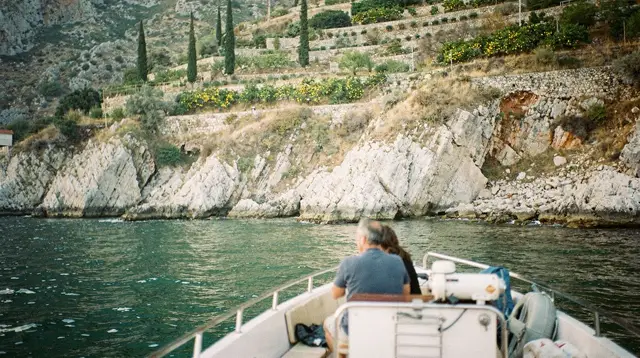
Villefranche-sur-Mer sits on one of the deepest natural harbours on the Mediterranean, deep enough that cruise ships anchor offshore rather than dock. That depth is the town’s whole character: a working port, a curve of pastel houses climbing the hillside behind it, and water calm enough to feel enclosed rather than open sea. On the quay, the small Chapelle Saint-Pierre was decorated inside by Jean Cocteau in the 1950s — frescoes covering the walls and ceiling, open to visitors for a modest fee with posted hours worth checking before arrival. Beyond the chapel, Villefranche rewards sitting still more than covering ground: a coffee facing the rade, a walk through the old town’s vaulted rue Obscure, watching the harbour traffic move.
For a longer look at the water itself, the Villefranche and Cap-Ferrat boat tour guide lists options that put the rade in view from sea level rather than the quay. Travelers who would rather be in the water than looking at it can add a private boat and snorkeling outing from Villefranche, which uses the same calm, enclosed bay that makes the town’s harbour distinctive in the first place — a different way to spend the same morning rather than an addition to it.
Walking to Saint-Jean-Cap-Ferrat
From Villefranche, the sentier du littoral — the coastal footpath — runs along the base of the Cap-Ferrat peninsula toward Saint-Jean-Cap-Ferrat. It is a walk, not a stroll: rocky in sections, with limited shade and a few short scrambles, but it stays close to the water the whole way and avoids the road above. Closed shoes are worth having; sandals are the wrong footwear here. The Cap-Ferrat coastal path walk covers the route in more detail, including where it gets narrow.
Saint-Jean-Cap-Ferrat and the Villa Ephrussi de Rothschild
Saint-Jean-Cap-Ferrat is a quieter register than Villefranche — a fishing port turned discreet residential peninsula, with some of the coast’s largest private villas behind hedges and gates that give little away from the street. The one property open to the public is the Villa Ephrussi de Rothschild, a Belle Époque villa built for Baroness Béatrice Ephrussi de Rothschild in the early twentieth century, set in a sequence of themed gardens — French formal, Spanish, Florentine, Japanese — on a promontory with sea views on both sides. It is a paid site with set opening hours that shift with the season, so check the current timetable rather than assuming it matches a summer schedule. The Villa Ephrussi de Rothschild visit guide has current practical detail on tickets and timing.
Beyond the villa, Cap-Ferrat’s own coastal path continues around the peninsula for those with time and energy left after the walk from Villefranche — otherwise, the port of Saint-Jean is a reasonable place to end the day with a late lunch or an early dinner facing the water.
Getting back
Trains run back to Nice-Ville from Villefranche-sur-Mer through the evening; there is no need to plan the return with precision, only to allow time to walk back down from Cap-Ferrat to a station or bus stop rather than assuming a taxi will be waiting. For context on how this day compares with pushing further east, the Villefranche and Cap-Ferrat day trip guide and the wider day trips from Nice guide set out the other options this itinerary leaves aside.
Where this stops, and what the third day adds
This two-day plan is built around a boundary as much as a route: it covers Nice and one bay to its east, and it stops at Cap-Ferrat. Èze, perched above the Moyenne Corniche, and Monaco, further along the coast again, are not squeezed in — trying to add either turns a slow day at the rade into a rushed one. If Villefranche’s calm harbour and Cap-Ferrat’s garden villa earn a return visit, the three-day Nice and Riviera itinerary picks up exactly where this one leaves off, continuing along the corniches to Èze and Monaco. For a shorter add-on instead of a full extra day, the Èze day trip from Nice covers that stretch on its own.
Two days is also a real constraint worth naming rather than glossing over. It rules out Cannes and the perched villages to the west, the Mercantour and its Alpine valleys inland, and most of the eastern corniche beyond Cap-Ferrat — all of which have their own itineraries once there is a third or fourth day to give them. The how many days in Nice guide sets out roughly what each extra day buys, and the best time to visit Nice guide is worth a look before booking, since a two-day plan built around outdoor walking works differently in August heat and crowds than it does in May or October. None of that changes what this itinerary covers — it is simply the honest edge of what two days, done properly, can hold.
Two days in Nice and Cap-Ferrat, at a glance
| Day | Base | Focus | Transport |
|---|---|---|---|
| Day 1 | Nice | Vieux-Nice, Promenade des Anglais, Colline du Château, museums | On foot / tram |
| Day 2 | Villefranche-sur-Mer, Saint-Jean-Cap-Ferrat | The rade, Chapelle Saint-Pierre, coastal path, Villa Ephrussi de Rothschild | TER train from Nice-Ville |
| Stop | Rough train or walk time from Nice-Ville | Notes | |
| Villefranche-sur-Mer | Under 10 minutes by train, 30-40 minutes door to door | Station sits above the port; walk down | |
| Saint-Jean-Cap-Ferrat | 30-45 minute walk from Villefranche along the coastal path | Rocky in places, limited shade |
Seeing the rade from the water rather than the quay changes the second day’s pace again. A short outing such as the boat tour that stops at Villefranche works well tacked onto the morning before the walk to Cap-Ferrat, and a guided visit built around Villefranche’s art and old town is a useful alternative for a day with less walking. For travelers basing the whole day around the bay rather than reaching Cap-Ferrat on foot, a private tour of Villefranche and its bay covers the same ground at a set pace.
Two days in Nice and Cap-Ferrat: questions answered
Do I need a car for this two-day itinerary?
No. Day one is entirely on foot and by tram within Nice. Day two runs on the coastal TER train from Nice-Ville to Villefranche-sur-Mer, then on foot to Saint-Jean-Cap-Ferrat. Nothing in this plan needs a car.
How long does the train from Nice to Villefranche-sur-Mer take?
As a rough order of magnitude, budget under 10 minutes on the TER, plus time to reach Nice-Ville and walk down from Villefranche station to the port. In practice, allow closer to 30-40 minutes door to door.
Can I fit Èze or Monaco into these two days?
Not comfortably. This itinerary deliberately stops at Saint-Jean-Cap-Ferrat. Èze and Monaco add a full corniche further east and are covered in the three-day itinerary instead.
Is the Villa Ephrussi de Rothschild worth the entrance fee?
Most visitors who enjoy formal gardens and Belle Époque interiors say yes. It is a paid site with set opening hours, so check the current timetable before walking out to the tip of the cape.
What should I wear for the Cap-Ferrat coastal path?
Closed shoes with grip, not sandals. Sections of the sentier du littoral run over rock close to the water, and there is limited shade for most of the walk.
Is two days enough to see Nice properly?
It is enough for a first, honest look at both the city and one stretch of coast east of it. It will not cover Cannes, the perched villages, or the full eastern corniche — those need extra days.
Where should I stay for this itinerary?
Basing yourself in Nice for both nights is simplest: everything on day two is a short train ride away, and you avoid packing and moving for a single night in Villefranche.
tours.2 days
Verified deep-linked GetYourGuide tours. Book through these links and we earn a small commission at no cost to you.
GetYourGuide does not provide a product photo for this activity — the image shows the meeting point, photographed by us.