Three days in Nice and the Riviera
Why this order: Nice, then Èze, then Monaco
Two days in Nice usually means Villefranche-sur-Mer and Saint-Jean-Cap-Ferrat, just east along the coast. A third day pushes further along the same line — up into the hills to the perched village of Èze, then down the coast to Monaco — rather than repeating ground already covered. It works well in this order: Nice first to get oriented and cover the essentials on foot, Èze on day two as a half-day detour into the hills, Monaco on day three as a full day by train. This itinerary deliberately does not go west to Antibes or Cannes; that’s for a five-day trip or longer.
No car is needed. Nice is walkable and served by tram, the bus climbs to Èze, and the coastal train (TER) reaches Monaco in about 20–25 minutes from Nice-Ville station.
Nice makes a natural base for this shape of trip: it’s the fifth-largest city in France, with its own airport, so the corniches and Monaco line up as add-ons rather than requiring a change of base. The route runs east along the coast toward Italy, which sits about thirty kilometres past Menton — this itinerary doesn’t go that far, but the same line of travel continues there if a fourth day gets added later, and it’s the basis of the two-day Monaco, Menton and Italian Riviera itinerary for anyone wanting to push further.
Before you go
Pack layers even in summer — evenings on the Promenade can be breezy — and check what to pack for the French Riviera if this is a first visit. Base yourself centrally; see where to stay in Nice by neighbourhood for the trade-offs between Vieux-Nice, the Promenade and the station area. If arriving by plane, the tram (lines 2 and 3) links Nice Côte d’Azur airport to the centre in about 25–30 minutes.
A few basics apply across all three days. The currency is the euro everywhere, including in Monaco; French is the working language, though English is common in tourist areas; sockets are the standard European 230V, types E and F, so non-European visitors need an adaptor; people drive on the right. The emergency number is 112 across both France and Monaco. Restaurant bills already include service, so tipping is a rounding-up gesture rather than an expectation — see tipping and restaurant etiquette on the Riviera for more.
This plan works in any season, but the experience shifts a lot with it. Summer (June to September) brings warm, dry weather and sea temperatures around 24–26°C in August, alongside the year’s biggest crowds and highest prices — Èze in particular gets uncomfortable at midday in July and August. Winter stays mild on the coast, often 12–15°C in the afternoon, even as snow falls in the Alpine hinterland an hour inland. Spring and early autumn are the easiest compromise. Late October and November can bring intense Mediterranean rain episodes, so it’s worth checking the forecast before day two or three if travelling then. See best time to visit Nice for a fuller month-by-month picture.
Day 1: Nice on foot
Start in Vieux-Nice, the old town of ochre facades and narrow lanes, with a coffee near the Cours Saleya flower and produce market (closed Mondays, when it becomes a brocante). Walk to Place Masséna and the Promenade du Paillon green corridor, then climb the Colline du Château — there’s no château left standing, just ruins, a park and a waterfall, but the viewpoint over the Baie des Anges and the port is worth the 20-minute walk up (or the lift, for a small fee).
Nice has been French only since 1860, when the Treaty of Turin ceded the former County of Nice — until then part of the states of the House of Savoy — to France; Menton and Roquebrune followed a year later, in 1861. That relatively short history as a French city, layered onto its 19th-century role as a winter resort for European aristocracy, is part of why Vieux-Nice reads differently from towns further along the coast. UNESCO recognised this in 2021, inscribing “Nice, Winter Resort Town of the Riviera” as a World Heritage Site, largely for the Promenade des Anglais and the belle-époque architecture set back from it.
Come down toward Port Lympia for lunch, then walk or take the tram out to the Promenade des Anglais, which runs about 7 km along the bay. The beaches here are pebble, not sand — bring water shoes if you plan to swim, or rent a mattress at a private beach section. From Port Lympia, a short uphill walk also reaches Mont Boron, wooded and quieter than the seafront, with views back over the bay and the old port’s fishing boats and yachts — a good spot to slow down if the morning has already meant a lot of walking.
In the afternoon, head to Cimiez for the Musée Matisse or the Musée national Marc Chagall, both a short bus or taxi ride from the centre. For an overview of what else is worth the entry fee, see best museums in Nice.
For dinner, look for socca, pan bagnat and salade niçoise in Vieux-Nice — see what to eat in Nice for where locals actually eat. If you’d rather have the city framed for you, a walking food tour or an old-town walking tour covers the same ground with context. Travelling with children usually means the same day at a lighter pace — see Nice with kids for which stops to trim or swap.
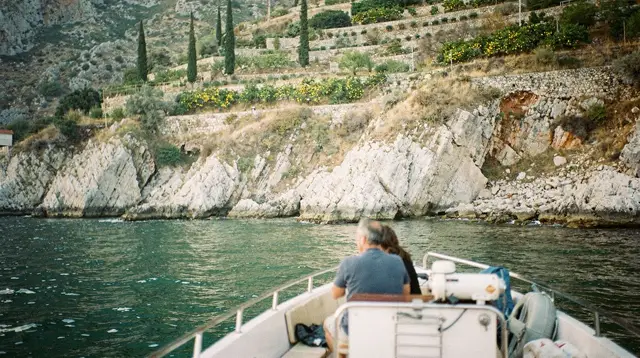
To close the day on the water, consider a sunset outing:
a private boat trip along the Baie des AngesDay 2: The Moyenne Corniche and Èze
Three roads run east from Nice toward Italy: the Basse Corniche along the water, the Moyenne Corniche halfway up, and the Grande Corniche at the top with the widest views. Today’s target is Èze, a perched village at around 430 m, reached by the Moyenne Corniche — about 30–40 minutes by bus or car from Nice, less by taxi.
Èze gets crowded fast in summer: tour buses and cruise groups tend to arrive from mid-morning and the narrow lanes fill up by midday. Arrive early, ideally before 10 am, to walk the village with some room to breathe. At the top, the Jardin exotique gives a genuinely good panoramic view over the coast toward Cap Ferrat — worth the small entry fee. Afterwards, some walkers descend on the steep path nicknamed the “chemin de Nietzsche” toward Èze-sur-Mer, which takes about an hour downhill and is not for flip-flops.
Èze is the most visited of the Riviera’s perched villages, but it isn’t the only one worth a detour on a longer trip — Saint-Paul-de-Vence and Vence sit inland northwest of Nice, on a different road, and suit a separate day rather than an add-on to this one. For a wider view of the category, the best perched villages of the French Riviera compares several at once. Drivers or taxi passengers who take the Grande Corniche rather than the Moyenne Corniche get the widest views of the three coast roads, with pull-offs looking down over Èze and along the coast toward Cap Ferrat; see the best viewpoints on the French Riviera for specific spots worth the stop.
If you’d rather not manage the bus timetable, a half-day tour covers Èze with commentary and usually adds a stop or two along the corniche:
a two-hour guided visit of ÈzeBack in Nice by mid-afternoon, there’s time for the beach, a wander through Place Masséna, or simply resting before day three, which is the longest of the trip.
Day 3: Monaco and Monte-Carlo
Monaco is a short train ride away — about 20–25 minutes from Nice-Ville on the coastal TER line — and it’s worth clearing up two things about it before you go. Monaco is a sovereign state, not part of the European Union, though it uses the euro and has no border control with France; crossing from Nice feels like nothing more than another train stop. And Monte-Carlo is a district of Monaco, home to the casino and the Hôtel de Paris — the capital is Monaco-Ville, on the rock, where the Prince’s Palace and the old town actually sit. There’s no airport in Monaco itself; everyone arrives via Nice, by train, bus, car, or helicopter to the Fontvieille heliport.
Start at Monaco-Ville on the Rocher for the Prince’s Palace (the changing of the guard is around 11:55 am), the cathedral, and the Musée océanographique. Walk down to Port Hercule, then over to Monte-Carlo for the exterior of the Casino de Monte-Carlo — entry requires being 18 or over with ID, and a smart dress code applies inside.
Monaco is compact enough to cover on foot in a day, and a self-guided route through Monaco-Ville, the harbour and Monte-Carlo follows roughly the same ground described here without needing any transport inside the principality; see Monaco walking tours for a structured version, or Nice to Monaco transport options for alternatives to the train, including a seasonal summer boat. If the dates line up with the Monaco Grand Prix in May, expect the town centre to be reshaped by grandstands and street closures for weeks around the race — worth checking before booking a visit that month; see the Monaco Grand Prix travel guide.
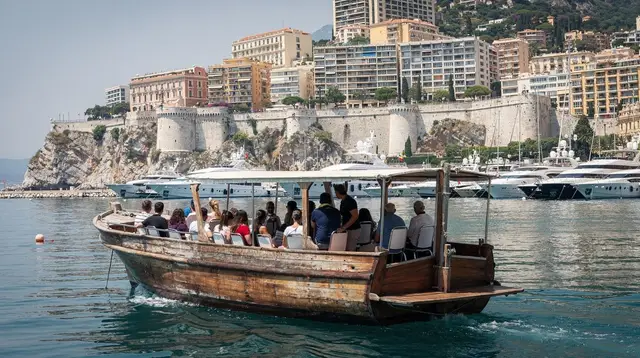
For a full day that also folds in Èze on the way back, or if you’d rather not retrace the train:
a full-day tour combining Monaco, Monte-Carlo and ÈzeOr, for a Nice-based full day with private transport:
a private full-day tour from Nice to MonacoHead back to Nice by early evening train, or stay for dinner in Monaco before the last connections.
Planning notes
| Day | Focus | Getting there | Time needed |
|---|---|---|---|
| 1 | Nice (Vieux-Nice, Promenade, Cimiez) | On foot / tram | Full day |
| 2 | Èze village and Jardin exotique | Bus or tour, Moyenne Corniche | Half day |
| 3 | Monaco and Monte-Carlo | Train from Nice-Ville, ~20–25 min | Full day |
Budget roughly €60–100 per person per day for meals and entries outside guided tours, more in Monaco where prices run higher. For a fuller breakdown, see Nice trip cost and the French Riviera on a budget.
Local buses and the tram in Nice run on the same Lignes d’Azur network; a multi-trip or day pass usually works out cheaper than single tickets bought on board, including for the bus up to Èze — see the Lignes d’Azur bus guide for fares and how tickets work.
If this itinerary feels short, five days on the French Riviera extends it west to Cannes, Antibes and the Îles de Lérins, and one week on the French Riviera folds in this same route alongside a slower pace. For a tighter trip that skips Monaco altogether, see two days in Nice.
FAQ: three days in Nice, Èze and Monaco
Is Monaco part of the European Union?
No. Monaco is a sovereign state, not an EU member, though it uses the euro and has no border control with France, so crossing from Nice by train feels routine.
Is Monte-Carlo the capital of Monaco?
No. Monte-Carlo is a district of Monaco, known for its casino. The capital is Monaco-Ville, on the Rocher, where the Prince’s Palace and cathedral are located.
Does Monaco have its own airport?
No. Monaco has no airport. Visitors arrive via Nice Côte d’Azur airport, then continue by train (about 20–25 minutes from Nice-Ville), bus, car, or helicopter to the Fontvieille heliport.
Do I need a car for this three-day itinerary?
No. Nice is walkable with tram support, a bus or guided tour reaches Èze, and the coastal train covers Nice to Monaco directly.
When should I visit Èze to avoid the crowds?
Arrive before 10 am. Èze fills with tour groups from mid-morning through the afternoon in summer, and the lanes are narrow enough that it gets uncomfortable by midday.
How do I get from Nice to Monaco?
The coastal TER train from Nice-Ville takes about 20–25 minutes and is the simplest option. Buses and guided tours also run the route, along with seasonal boats.
Can I extend this itinerary further west to Cannes or Antibes?
Yes, but not within three days without cutting something. Five days or more allows Cannes, Antibes and the Îles de Lérins to be added comfortably; see the five-day itinerary for that version.
tours.3 days
Verified deep-linked GetYourGuide tours. Book through these links and we earn a small commission at no cost to you.
GetYourGuide does not provide a product photo for this activity — the image shows the meeting point, photographed by us.