What to pack for the French Riviera
What should you pack for a trip to Nice and the French Riviera?
Pack for a Mediterranean climate: light layers and strong sun protection for summer, a warmer layer and a real rain jacket for autumn and winter, and sturdy sandals or water shoes for the pebble beaches. Add a 230V type E/F adapter and one smart-casual outfit for churches or the Casino de Monte-Carlo.
Packing for a Mediterranean coast, not a generic beach trip
Nice and the French Riviera sit on the Mediterranean, with real seasons rather than one long summer. What you need in a suitcase changes a lot between a July heatwave and a grey November week, and it also changes the moment you leave the coast for a day trip toward the Mercantour. This list is built around that, plus the one detail most visitors get wrong before they even land: the beaches.
Check the season before you pack in detail. For a month-by-month read, see Nice weather by month and best time to visit Nice.
Correct the beach confusion first: pebbles, not sand
The beaches along the Promenade des Anglais in Nice are covered in smooth pebbles, not sand. That is true for essentially the whole 7 km stretch of the Baie des Anges. Walking barefoot across them from a beach towel to the water is uncomfortable for most people, and it gets worse in the height of summer when the stones have been sitting in the sun all day.
Two items solve this:
- Water shoes or sturdy sports sandals with a closed or semi-closed toe, thin sole, and a heel strap. They let you walk to the water’s edge and swim without pain, and they double as reasonable footwear for rocky coves elsewhere on the coast.
- A beach mat, folding chair, or a thicker towel to sit on, since there is no sand to dig into. Private beach clubs rent loungers and mattresses by the day if you would rather not carry your own.
If sand matters to you, plan a half-day toward Juan-les-Pins, Cannes, or parts of Antibes, which have proper sandy stretches — see best beaches in Nice and the Riviera for where sand and pebbles actually are. Villefranche-sur-Mer has a mix of sand and fine gravel, which is gentler underfoot than Nice’s main beaches.
This is a footwear and comfort issue, not a reason to avoid the water — the sea itself is exactly as inviting as any Mediterranean beach, and it warms to around 24-26°C by August.
The summer pack (June to September)
Summer on the Riviera is hot, dry, and sunny, with July and August the hottest and busiest months, often 28-30°C in the afternoon. The sun is strong and shade is limited on open stretches like the Promenade, so sun protection matters more than extra clothing.
| Category | What to bring | Why |
|---|---|---|
| Sun protection | Wide-brim hat, sunglasses, reef-safe sunscreen | Long hours outdoors with little shade on the coast |
| Clothing | Lightweight, breathable tops and bottoms, one swimsuit or two | Heat and humidity most of the day |
| Footwear | Water shoes or sports sandals, one pair of comfortable walking shoes | Pebble beaches, plus cobbled old-town streets |
| Evening wear | One smart-casual outfit: closed shoes, covered shoulders | Restaurants, churches, or an evening in Monaco |
| Extras | Reusable water bottle, a light scarf or wrap, a small dry bag | Heat, sun on boats, and splashes on excursions |
A light wrap or shawl is worth packing even in midsummer air conditioning indoors, on boats, and in churches, can be cooler than the street.
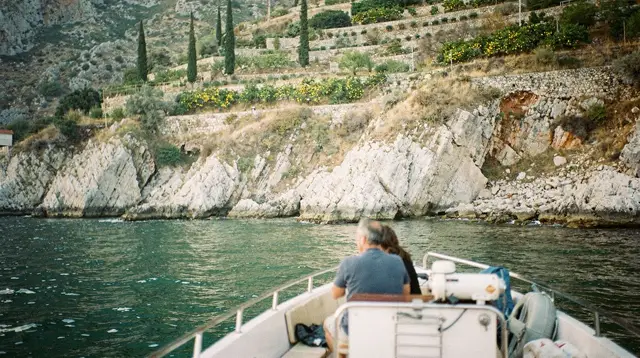
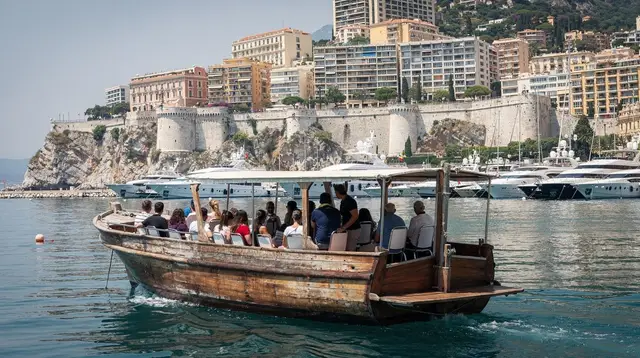
Sun and heat are also the main reason to book water-based excursions with some shade or breeze built in, rather than standing in full sun all afternoon. A private boat trip along the coast with a chef preparing an aperitivo on board keeps the day on the water instead of on hot pavement, and a light jacket for the breeze once the boat picks up speed is worth having even on a warm day.
The autumn-winter pack (October to March)
Winters on the Riviera coast are mild by most standards — afternoons are often 12-15°C in Nice — but two things catch visitors out: sudden, intense Mediterranean rain episodes in October and November, and the fact that the coast and the mountains a short drive away can be in completely different seasons.
| Category | What to bring | Why |
|---|---|---|
| Rain protection | A genuine waterproof rain jacket, not just showerproof | October-November Mediterranean storms can be sudden and heavy |
| Layers | A warm mid-layer (fleece or light sweater), a scarf | Mornings and evenings are cooler than midday |
| Footwear | Closed, comfortable shoes; waterproof if possible | Wet cobblestones in the old town and perched villages |
| Extras | A compact umbrella that handles wind, a daypack cover | Sudden downpours, especially near the coast |
Even on a mild coastal day, the Mercantour hinterland can be under snow just an hour or two inland. If your plans include the mountains — hiking near Saint-Martin-Vésubie, a scenic drive, or a scenic mountain horseback ride — pack separately for altitude: a proper insulating layer, waterproof shoes or boots, and gloves, even if you leave the coat behind on the coast itself. A private scenic horseback ride into the Riviera hinterland is a good example of a trip that needs warmer layers than the packing list you’d bring for Nice alone.
For the full seasonal picture, see French Riviera in summer and French Riviera in winter.
Shoulder season: spring and late September, the easiest packing list
April-May and the second half of September are the best compromise on the Riviera, and they’re also the simplest season to pack for. Daytime temperatures sit comfortably between the summer heat and the winter chill, the sea is warming up or still holding its late-summer warmth, and the crowds and prices of July-August have not yet arrived (or have just left). A light layer for morning and evening, one warmer top for an occasional cool spell, and normal walking shoes cover most days.
The one thing worth keeping from the winter list even in shoulder season is a compact rain layer — a sunny forecast on the coast can still turn showery for an hour, and it packs small enough that leaving it home saves no real space. If your trip lands in this window, best time to visit Nice and Nice weather by month go into the month-by-month detail; for a short stay built around exactly these conditions, see two days in Nice or three days in Nice and the Riviera.
One smart-casual outfit, for churches and the Casino
Nice’s baroque churches, Monaco’s Casino de Monte-Carlo, and some upscale restaurants expect a step up from beachwear. Pack at least one outfit that covers shoulders and knees comfortably, plus closed shoes — sandals are generally fine, flip-flops are not.
The Casino specifically requires guests to be 18 or over with valid photo ID, and asks for smart-casual dress in the main gaming rooms; some evening rooms ask for jacket and tie. You do not need this outfit for a casual walk past the building or the exterior, only if you plan to go inside and play. Details on what is and isn’t required are in Monte-Carlo Casino dress code and visit.
The same modest-dress rule applies to visiting working churches such as those in the Vieux-Nice or the chapel in Vence — covered shoulders are usually enough, no formal outfit required.
Electronics: one adapter covers the whole trip
France and Monaco both run on 230V with type E sockets (type F plugs also fit type E outlets, so either works). A single E/F adapter covers Nice, every village on this guide, and Monaco — there is no separate adapter needed for crossing into the principality. If you’re arriving from outside continental Europe, this is the one adapter to pack; UK three-pin and US two-pin plugs both need it.
A portable charger is worth adding if a day includes a lot of walking and photos — old-town streets, Èze’s clifftop paths, or a boat trip can eat through a phone battery faster than expected.
A day-trip and activity add-on list
Beyond the base wardrobe, a few extras depend on what you’re doing that day:
- Boat trips and coastal excursions: a light windbreaker (it’s cooler on open water than on land), a dry bag for phones and cameras, and sunglasses with a strap.
- Perched villages (Èze, Saint-Paul-de-Vence, Gourdon): proper walking shoes — cobbles and slopes are hard on thin sandals, even in summer. See Èze day trip from Nice for the terrain.
- Scenic flights: for a shared panoramic helicopter flight over the coast, dress in light layers you can adjust, since the heliport can be breezy even on a warm day, and keep valuables in a zipped pocket.
- Full-day itineraries: a small daypack, snacks, and a printed or downloaded map, since a full-day tour covering several Riviera towns in one trip means long stretches without easy access to your hotel room. If you’d rather plan your own version of that day, day trips from Nice and getting around the French Riviera cover the logistics.
Documents, money, and a few things you don’t need
France and Monaco both use the euro, so there is no separate currency to carry or exchange when a day trip crosses into the principality — there’s no border control between the two either, but keep a photo ID on you anyway, since hotels, car rentals, and the Casino all ask for one. Restaurant bills already include service, so tipping is a genuinely optional extra rather than an expected add-on; tipping and restaurant etiquette on the Riviera covers the small differences in practice. France drives on the right, and the emergency number everywhere on this guide, including Monaco, is 112.
A few things are usually better left at home: heavy hardback guidebooks (a phone covers most of it), a full first-aid kit (pharmacies are everywhere in Nice and along the coast), and a second pair of “smart” shoes beyond the one outfit above — one is enough for the churches-and-Casino occasions this trip calls for. Families travelling with young children have their own version of this list; see French Riviera with kids for what changes. Anyone renting a car on the French Riviera should also keep their driving licence and rental paperwork in the same document pouch as their ID, since parking meters and toll booths in the old towns come up quickly.
A simple carry-on checklist
| Always | Summer add-ons | Autumn-winter add-ons |
|---|---|---|
| Water shoes or sports sandals | Sunscreen, hat, sunglasses | Waterproof rain jacket |
| One smart-casual outfit | Light, breathable clothing | Warm mid-layer, scarf |
| Comfortable walking shoes | Swimsuit | Closed, weatherproof shoes |
| 230V type E/F adapter | Light scarf for air conditioning | Compact wind-resistant umbrella |
| Reusable water bottle | Beach mat or towel | Gloves if heading to the Mercantour |
If your trip starts by air, the adapter and a day’s change of clothes are worth keeping in hand luggage — see Nice airport to city centre for what the arrival looks like. For a broader look at what trips this size, one week on the French Riviera lays out a full itinerary, and French Riviera travel mistakes to avoid covers the planning slip-ups, including the sandy-beach assumption, in more general terms. Couples packing for a coastal trip can also check French Riviera for couples for pacing and timing.
Frequently asked questions about packing for the French Riviera
Are the beaches in Nice sandy or pebbly?
Pebbly. The Promenade des Anglais beaches are covered in smooth stones, not sand, so bare feet get uncomfortable fast. Sandy stretches exist further along the coast at Juan-les-Pins, Cannes and parts of Antibes, and Villefranche-sur-Mer has sand mixed with fine gravel.
Do I need water shoes for Nice?
They make a real difference. Water shoes or sturdy sports sandals let you walk into the sea and across the pebbles without wincing, and they dry faster than regular sandals. A beach mat or folding chair also helps, since public beaches have no sand to sit on.
What plug adapter do I need for France and Monaco?
France and Monaco run on 230V with type E sockets (type F appliances also fit). Bring a single E/F adapter; UK, US and most non-European plugs need one, and it works the same on both sides of the border.
What should I wear to visit the Casino de Monte-Carlo or a church?
Something smart-casual: closed shoes, trousers or a knee-length skirt or dress, and a shirt or top with covered shoulders. The Casino also requires guests to be 18 or over with valid photo ID, and some rooms ask for jacket and tie in the evening.
Is the weather very different between the coast and the Mercantour?
Yes, and by a lot. On the same October or January day, Nice can be 12-15°C and dry while the Mercantour, an hour or two inland, has snow on the ground. If a day trip heads into the hinterland, pack a warm layer and proper shoes even when the coast feels mild.
What should I pack for summer in Nice?
Light, breathable clothing, a hat, sunglasses and reef-safe sunscreen, since the sun is strong and shade is limited on the Promenade. Bring a swimsuit, water shoes, and one smart-casual outfit for evenings, plus a reusable water bottle for the heat.
What should I pack for a Riviera trip in October or November?
A proper waterproof rain jacket rather than a light showerproof one, since the region can see intense, sudden Mediterranean storms in autumn. Add a warmer layer, closed shoes, and an umbrella that can handle wind, and check the forecast before day trips.
Can I get by with just sandals on the Riviera?
Only in high summer and only on the coast. Perched villages like Èze and Saint-Paul-de-Vence have steep cobbled streets that are hard in flimsy sandals, and cooler months call for closed shoes, so pack at least one sturdy pair alongside your beach sandals.
Trip-planning guides for Nice and the Riviera
Verified deep-linked GetYourGuide tours. Book through these links and we earn a small commission at no cost to you.
GetYourGuide does not provide a product photo for this activity — the image shows the meeting point, photographed by us.