Five days on the French Riviera without a car
Nice sits almost exactly in the middle of the Riviera coastline, and the TER train that runs along it makes a car unnecessary for most of what people come here to see. This five-day plan keeps one fixed base in Nice and treats every day as a round trip from Nice-Ville station: three days east toward Italy, two days west toward Cannes.
It picks up where the shorter formats leave off. If you’ve already read a one-day or two-day plan covering Nice, Villefranche, Cap-Ferrat, Èze and Monaco, this itinerary keeps that eastern half but adds a real western extension — a full day in Antibes and a full day in Cannes — instead of squeezing everything into a shorter budget format. If you want a tighter, cheaper four-day version that skips Èze and keeps a leaner daily spend, that’s a separate budget four-day itinerary; this one runs a day longer and covers more ground at a steadier pace.
Why base in Nice and travel by train
The coastal TER line runs from Cannes through Antibes, Nice, Villefranche, Beaulieu-sur-Mer, Èze-sur-Mer, Monaco and on to Menton and the Italian border. Trains run frequently through the day, journeys between neighbouring towns rarely take more than 20-30 minutes, and Nice-Ville sits close to the centre, connected to the airport and the old town by tram. Staying in one hotel for five nights and doing day trips in both directions is simpler and usually cheaper than moving accommodation, and it means never depending on parking or Riviera summer traffic.
Day 1: Nice
Spend the first day getting oriented in Nice itself, on foot. Start in Vieux-Nice, the old town’s tangle of ochre-facaded lanes, and try socca and pissaladière from a market stall. The Cours Saleya flower and produce market runs every morning except Monday, when it becomes an antiques market instead. Walk east to Colline du Château — there’s no château left, just a park, a waterfall and the best view over the Baie des Anges and the port, reached on foot or by lift.
In the afternoon, walk or take a short bus ride to Cimiez for the Musée Matisse and the Roman arena site, or head to the Musée national Marc Chagall closer to the centre. Close the day with a stretch of the Promenade des Anglais — about 7 km end to end, though a 30-45 minute section near sunset is plenty. The beach here is pebble, not sand, all along the promenade; bring water shoes if you plan to swim.
Day 2: Villefranche-sur-Mer and Cap-Ferrat
Take the train 10 minutes east to Villefranche-sur-Mer, a deep natural harbour town with a pastel old quarter and Jean Cocteau’s decorated Chapelle Saint-Pierre. From there, either walk the Cap-Ferrat coastal path or take a short bus ride to the peninsula for the Villa Ephrussi de Rothschild and its themed gardens — allow at least two hours if you want to see all of them properly.
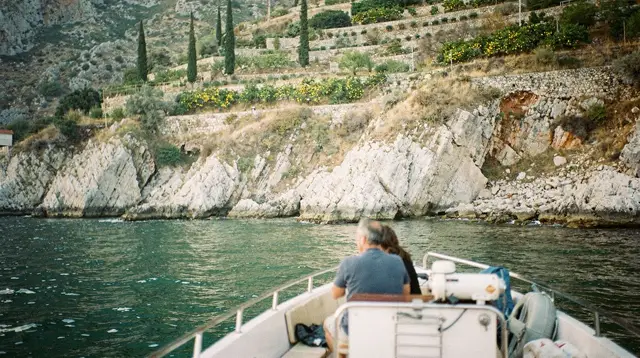
Villefranche’s bay is also a good spot to get on the water rather than just look at it. A short snorkelling boat trip is an easy half-day add-on:
a private boat trip out of Villefranche with stops for snorkelling along the coastBeaulieu-sur-Mer, one stop further on the same line, has its own smaller villa (Villa Kérylos, built as a recreation of an ancient Greek house) if there’s time left before the return train.
Day 3: Èze and Monaco
This is the busiest day of the trip and benefits from an early start. Take the train to Èze-sur-Mer, then the bus up to the perched village of Èze, about 430 metres above the coast, for the Jardin exotique and the panoramic views. Èze fills up between 11am and 4pm in summer, so arriving before mid-morning is worth it. A short guided loop is an efficient way to see the village without wasting time working out where to go:
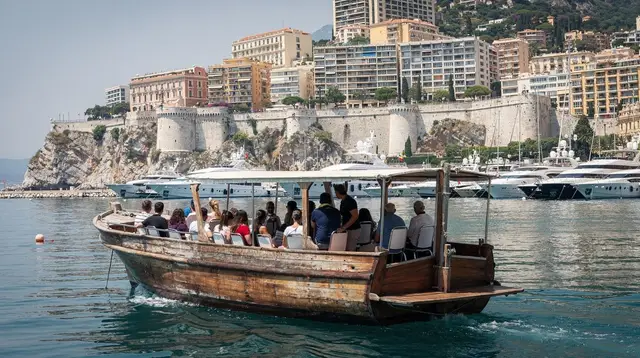
a two-hour guided tour through Èze’s lanes and viewpointsFrom Èze, continue by train (or bus down the Moyenne Corniche) to Monaco. Monaco is a sovereign state, not part of the EU, though it uses the euro and has no border checks with France; its capital is Monaco-Ville, the old town on the Rocher — not Monte-Carlo, which is a district built around the casino and opera house. Watch the Changing of the Guard outside the Palais princier (around 11:55am), walk down to the Musée océanographique, and finish at the port. Seeing Monaco from the water adds a different angle on the harbour and the Rocher:
a two-hour cruise along the coast into Monaco’s harbourIf the casino district interests you, note the dress code and minimum age of 18 for the gaming rooms, and bring ID.
Day 4: Antibes
Take the train west, past Nice airport and Cagnes-sur-Mer, to Antibes — about 25-30 minutes from Nice-Ville. Antibes has kept more of its historic fabric than most Riviera towns: 16th-century ramparts along the sea, the Provençal market at the covered Marché Provençal, and the Musée Picasso in the Château Grimaldi, where the artist worked for several months in 1946. Fort Carré, on a promontory just north of the old town, is worth the short walk for the view back over the port even if you skip the guided climb inside.
Antibes’ harbour, Port Vauban, is one of the largest marinas on the coast and a good base for getting out on the water for an afternoon:
a private skippered yacht trip along the Antibes coastlineIf there’s time before the return train, Juan-les-Pins, a short walk or bus ride south, has sandy beaches — a contrast to Nice’s pebble shore — and is a straightforward place to spend a last hour before heading back.
Day 5: Cannes and the Lérins Islands
The final day goes to Cannes, roughly 35-40 minutes from Nice-Ville by train. Walk La Croisette, the seafront boulevard lined with hotels and private beach clubs, then climb into Le Suquet, the old town on the hill above the port, for a view back over the bay. The Palais des Festivals, where the film festival is held every May, sits right on the waterfront.
From Cannes’ Vieux Port, boats run to the Îles de Lérins in about 15-20 minutes. Sainte-Marguerite has the Fort Royal and the cell where the Man in the Iron Mask was reportedly held; Saint-Honorat is a working monastery island with vineyards run by the monks. Either makes a good half-day if you’d rather trade market streets for pine forest and quiet coves — but check return ferry times before you go, since the last boats back are earlier than you’d expect in low season.
Getting around this itinerary
| Leg | Train time from Nice-Ville | Notes |
|---|---|---|
| Nice to Villefranche-sur-Mer | ~10 min | Frequent TER service |
| Nice to Èze-sur-Mer | ~15 min | Bus needed up to the village |
| Nice to Monaco | ~20-25 min | Direct TER |
| Nice to Antibes | ~25-30 min | Direct TER, west along the coast |
| Nice to Cannes | ~35-40 min | Direct TER, end of this itinerary’s range |
Buy train tickets at the station or through the regional app before boarding; a multi-day transport pass can be worth it if you’re also using Nice’s tram and buses on Day 1. For a fuller picture of how the whole network fits together, see the guide to getting around the French Riviera.
Budget for this trip
Expect a mid-range daily spend once trains, museum entries, a couple of paid attractions and meals are added up — Monaco and Èze push the daily cost higher than Antibes or a self-guided walking day in Nice. Booking the Villa Ephrussi de Rothschild, the Musée Picasso and any boat trips a day or two ahead avoids queueing, especially from June through August when Èze, Monaco and Cannes are all busiest between late morning and mid-afternoon.
When to do this itinerary
Late spring (May-June) and September give the best balance of warm weather, a swimmable sea and manageable crowds. July and August bring sea temperatures around 24-26°C but also the highest prices and the fullest trains, especially on the Cannes and Monaco lines. Winter works for the museums and old towns — days are mild on the coast, often 12-15°C in the afternoon — but a few of the outdoor highlights, like the Cap-Ferrat coastal path, are more pleasant in better weather. October and November can bring intense, sudden Mediterranean storms; check the forecast before committing to a coastal walking day.
FAQ: five days on the French Riviera by train
Do I need a car for this itinerary?
No. Every stop on this route — Villefranche, Cap-Ferrat, Èze, Monaco, Antibes and Cannes — is reachable from Nice-Ville by the coastal TER train, with local buses covering the last stretch up to Èze village and out to Cap-Ferrat.
How is this different from the four-day budget itinerary?
The four-day budget version covers a similar eastern and western stretch but skips Èze and is built around a leaner daily spend. This five-day plan adds Èze as its own half-day and gives Antibes and Cannes each a full day rather than combining stops.
Is Monaco part of the European Union?
No. Monaco is a sovereign principality, not an EU member, though it uses the euro and has no border controls with France. Entry rules for visitors follow the Schengen area as they would crossing from France.
Can I fly into Monaco directly?
No, Monaco has no airport. Visitors arrive via Nice Côte d’Azur Airport (NCE), then continue by train (about 20-25 minutes to Monaco), bus, car, or helicopter to the Fontvieille heliport.
Are the beaches in Nice sandy?
No. Nice’s beaches, including along the Promenade des Anglais, are pebble. Sandy beaches on this route are found further west, in Juan-les-Pins and parts of Cannes.
Should I visit Saint-Paul-de-Vence or Grasse on this trip?
Not on this itinerary. Both are hard to reach without a car and are better suited to a driving-based itinerary; this train-based plan sticks to towns directly on or near the coastal rail line.
How far in advance should I book the Antibes or Cannes boat trips?
A day or two ahead is usually enough outside of July and August. In peak summer, booking earlier in the week avoids being shut out of afternoon departures.
What’s the best order to do the days in?
The order above works well, but the days are largely interchangeable — each is a self-contained round trip from Nice, so you can swap days around for weather or crowds without disrupting the rest of the plan.
tours.5 days
Verified deep-linked GetYourGuide tours. Book through these links and we earn a small commission at no cost to you.
GetYourGuide does not provide a product photo for this activity — the image shows the meeting point, photographed by us.