Monaco boat tours from Nice: see the Rocher from the water
What's the difference between a Monaco boat tour and a Monaco day trip from Nice?
A boat tour sails along the coast to Monaco and back, so the main experience is the view of the Rocher, Monaco-Ville and Port Hercule from the sea, with limited or no time ashore. A land day trip uses train, bus or car and spends its hours walking the Palace district and the Casino area. Choose the boat if seeing the principality from offshore is the point; choose the land trip to actually walk Monaco-Ville.
Why see Monaco from the water
Most visitors reach Monaco by train or by road along the corniches, and that’s the right choice if the goal is to walk Monaco-Ville or stand outside the Casino. A boat tour does something different: it shows the principality the way it was built to be seen for most of its history, from the sea. The Rocher rises straight out of the water, the Prince’s Palace sits above the ramparts, and the yachts stacked into Port Hercule give a sense of scale that’s hard to get from a hillside road. If you’ve already done the Monaco day trip from Nice on land, or you’re weighing it against a walking tour of Monaco, a boat trip is the complement, not a replacement: it’s built around the view from the deck, not the streets underfoot.
This guide covers what you’ll actually see, how the different boat tours compare, and where they leave from. For the confusions that trip up a lot of first-time visitors — Monaco’s status, its capital, its currency — the short version sits below, because it changes how you read the coastline as you sail past it.
Monaco-Ville, Monte-Carlo, and the sovereign state in between
Two things get mixed up constantly, and a boat deck is a good place to sort them out, because you can point at both from the water.
Monte-Carlo is not the capital. It’s a district of Monaco, the one built around the Casino, the Place du Casino and the Hôtel de Paris — the glossy, belle-époque skyline that most photos of “Monaco” actually show. The capital is Monaco-Ville, the old town on top of the Rocher itself, where the Prince’s Palace, the cathedral and the Oceanographic Museum stand. From a boat approaching Port Hercule, Monaco-Ville is the fortified hill on one side of the harbour; Monte-Carlo’s towers and the Casino gardens sit on the other. Your guide or captain will usually narrate this as you come in, but it’s worth knowing before you’re squinting at two different skylines wondering which one is which.
Monaco is a sovereign state, not part of France and not in the European Union. It’s an independent principality of about 2 km², with its own government and head of state — the ruling Prince. It uses the euro through a monetary agreement with the EU, and there’s no border control between Monaco and France, which is exactly why it feels like you’ve barely left Nice when you arrive. But sovereignty is real: Monaco sets its own laws, isn’t an EU member state, and functions as its own country squeezed between the sea and the French department of Alpes-Maritimes. None of this changes what you need to do as a visitor — no separate visa, no customs stop — but it’s worth getting right rather than calling Monaco “a part of France” or “in the EU,” both of which are wrong.
What you actually see from the deck
A Monaco boat tour is sold on the view, so it’s worth being specific about what that view includes, because it isn’t the Casino floor or the Palace courtyard — those need a landward visit.
- Port Hercule, Monaco’s deep-water harbour, packed with yachts of a size you don’t see lined up anywhere else on this coast. Most tours either sail past it slowly or, on some itineraries, dock inside it.
- The Rocher, the rock on which Monaco-Ville sits, with the ramparts and the Palace visible above the harbour.
- Monaco-Ville’s skyline — the cathedral towers, the Oceanographic Museum’s cliffside facade — seen as a single silhouette rather than as individual buildings you’d photograph on foot.
- Monte-Carlo’s hillside, on the other side of the port, with the Casino gardens and the belle-époque hotel rooftops.
- La Condamine, the harbourside district between the two, and Fontvieille, Monaco’s reclaimed-land district further along, with its marina and stadium.
- Depending on the route, the approach along the eastern corniche from Nice, past Villefranche-sur-Mer and Cap-Ferrat, before Monaco itself comes into view — a good preview if you’re also considering a Villefranche and Cap-Ferrat boat tour on a separate day.
What you don’t get from the water: the inside of the Casino, the Palace’s changing of the guard, or a walk through Monaco-Ville’s narrow streets. If those matter to you, pair a boat tour with a land visit on a different day, or pick one of the itineraries below that includes time ashore.
The main ways to do it
Boat tours to Monaco range from a few hours to a full evening out, and the differences are mostly about how far the boat goes, whether you get off, and what time of day you sail.
A private boat charter that sails from Nice directly to Monaco and back is the most flexible option: your own boat, your own schedule, and a route the captain can adjust for sea conditions or extra stops along the way, at a higher price than a shared cruise.
For a shared-group option that covers more ground, a day trip from Nice that sails the full Monaco and Monte-Carlo coastline usually runs longest and gives the clearest look at both Monaco-Ville and Monte-Carlo from offshore, sometimes combined with a swim stop.
If you’d rather see Monaco after dark, when the Casino and the Palace are lit and the harbour’s yachts have their deck lights on, an evening cruise past the illuminated Rocher and Monte-Carlo is a different, quieter version of the same view — no crowds, cooler air, and a skyline that photographs very differently from the daytime version.
A shorter alternative leaves from just outside Monaco: a sailing from Cap-d’Ail along the Monaco coast cuts the transfer time if you’re staying closer to the border than to central Nice.
If wildlife is the draw rather than the principality itself, note that cetacean-watching cruises head further offshore into deeper water and are a separate kind of trip from a coastal sightseeing run — worth booking as its own outing rather than expecting dolphins on a Monaco-focused sail.
Comparing the options
| Tour type | Typical duration | Departure | Best for |
|---|---|---|---|
| Private charter, Nice to Monaco | 2–4 hours, flexible | Nice | Small groups, flexible timing, a personalised route |
| Shared day trip along the coast | 4–7 hours | Nice | First visit, widest view of Monaco-Ville and Monte-Carlo, possible swim stop |
| Evening cruise, Monaco by night | 3–4 hours | Nice | Photos of the lit-up Rocher and Casino, cooler summer evenings |
| Coastal sailing from Cap-d’Ail | 2–3 hours | Cap-d’Ail | Shorter transfer for those staying near the border |
| Cetacean-watching cruise | Half day | Nice | Wildlife spotting further offshore, a different trip from a Monaco sightseeing sail |
Prices vary widely by boat size, group size and season — a shared coastal sailing runs a fraction of a private charter, and summer weekends command a premium across the board. Check current pricing and exact durations on the booking page before committing.
Practical planning
Departure points. Nice is the main hub: boats typically leave from the port area near Port Lympia, with pickup details confirmed after booking. A handful of tours leave from Cap-d’Ail, the last French town before the Monaco border, which shortens the sailing time but means arranging your own transport there first.
Season. Summer (June to September) has the most departures and the calmest, warmest sea — useful if you’re prone to seasickness, since a flat Mediterranean in August is a very different ride from a choppy one in March. Outside summer, schedules thin out and operators are quicker to cancel for weather, so keep your dates flexible if you’re booking for October through April.
What to bring. Sun protection even on a short sailing — there’s no shade on most open decks — and a light layer for the sea breeze, which is cooler than the temperature on land suggests. If you tend toward seasickness, an early booking on a calmer morning sailing beats an afternoon one when the wind tends to pick up.
Combining it with a land visit. If you want both the boat view and time walking Monaco-Ville, treat them as two separate bookings rather than expecting one trip to cover both. A Monaco walking tour with a local guide or the standalone Monaco day trip from Nice covers the Palace district and the Casino on foot; the boat trip covers the harbour and the skyline. For a different angle again, a helicopter flight between Cannes and Monaco shows the same coastline from above rather than from sea level, useful for comparison if you’re deciding which perspective to spend your budget on.
Photography. Late afternoon light on the Rocher and the golden hour approach into Port Hercule are the strongest photo windows on a daytime sailing; the night cruise is the better bet for the lit-up Casino skyline. If photos of Nice itself are the priority rather than Monaco, that’s a separate outing — see the Nice photo shoot guide rather than expecting a Monaco-bound boat to double as a Nice photography session.
Honest notes before you book
Boats reach Monaco by sea, and the sea doesn’t always cooperate. A sailing can be shortened, rerouted or cancelled for wind and swell, more often in autumn and winter than in July and August — build a spare day into your itinerary if a Monaco boat trip is a priority, not an afterthought.
Prices and crowds spike hard around the Monaco Grand Prix (late May or early June) — boats, hotels and even the harbour itself get reorganised around the race, and casual sightseeing cruises may be suspended entirely during the event. If your dates land near the Grand Prix, check with the operator before assuming a normal schedule; see the Monaco Grand Prix travel guide for what changes that week.
Don’t expect a sailing-only tour to get you inside the Casino or the Palace — that requires going ashore, on foot, on a different kind of visit. And don’t expect dolphins on a standard coastal run; that’s what the dedicated cetacean-watching cruises are for, and even those can’t guarantee a sighting.
Monaco boat tours: frequently asked questions
Is Monte-Carlo the capital of Monaco?
No. Monte-Carlo is a district of Monaco, built around the Casino and the Place du Casino. The capital is Monaco-Ville, the old town on the Rocher, where the Prince’s Palace and the cathedral stand.
Is Monaco part of the European Union?
No. Monaco is a sovereign state and is not an EU member. It uses the euro under a monetary agreement with the EU and has no border control with France, so crossing from Nice feels seamless, but Monaco governs itself independently.
Where do Monaco boat tours leave from?
Most depart from Nice, either from Port Lympia or a marina nearby, with some shorter sailings leaving from Cap-d’Ail, just before the Monaco border. Check your specific booking for the exact departure point.
How long does a boat tour from Nice to Monaco take?
A round trip along the coast typically runs from about 2 to 4 hours depending on how far the boat goes and whether it stops. Full day sailings that include swimming stops or a longer coastal run can run longer.
Can I get off the boat and walk around Monaco?
It depends on the tour. Some boat trips are sailing-only and pass Port Hercule without docking; others include free time ashore. Read the itinerary before booking if you want to set foot in Monaco-Ville or Monte-Carlo.
Do boat tours to Monaco run in winter?
Fewer than in summer, and sea conditions matter more. Most operators run a reduced winter schedule and can cancel or reschedule for rough weather, so build in flexibility if you’re visiting between November and March.
Will I see dolphins on a Monaco boat tour?
Not reliably. Dedicated cetacean-watching cruises head further offshore into deeper water where sightings are more likely in season, but no operator can promise dolphins or whales on any single outing.
Is a Monaco boat tour better than driving or taking the train?
Neither is objectively better; they show you different things. The train and the corniche roads let you stop in Èze or Villefranche-sur-Mer along the way and spend real time in Monaco-Ville. A boat tour gives you the coastline and the Rocher from an angle you can’t get on land, with no traffic or parking to deal with.
For everything else to do once you’ve decided how you want to see it, the Monaco things-to-do hub and the Monaco destination guide cover walking routes, food and the Palace district in more depth. If you’re building a longer stop that covers Monaco and Menton together, the Monaco, Menton and the Italian Riviera in two days itinerary lays out a workable order, and the Casino dress code guide is worth a read if an evening on land follows your afternoon on the water.
Boat cruises to Monaco, Cannes and the Îles de Lérins
Verified deep-linked GetYourGuide tours. Book through these links and we earn a small commission at no cost to you.
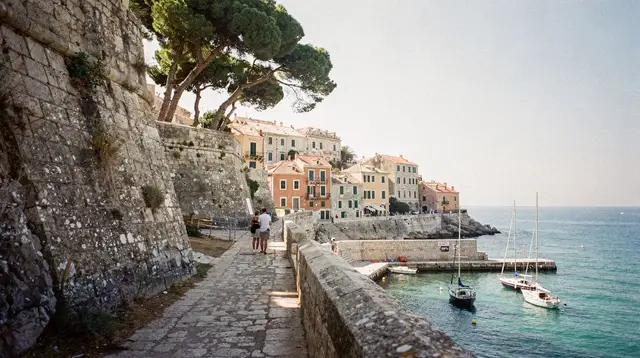
GetYourGuide does not provide a product photo for this activity — the image shows the meeting point, photographed by us.